
Solid Stain Versus Transparent Stain for Wood
A cedar deck can look beautifully weathered one season and unevenly gray the next. A pine fence may absorb stain in patches. And wood siding at a Muskoka cottage has to contend with sun, rain, snow, moisture, and long stretches between visits. The choice between solid stain versus transparent stain is not simply about color. It determines how much of the wood you see, how much protection the coating provides, and what future maintenance may involve.
For a lasting finish, the right answer depends on the wood’s condition, exposure, species, and the look you want to preserve. A professional assessment should start there, before a color card ever comes out.
Solid Stain Versus Transparent Stain: The Core Difference
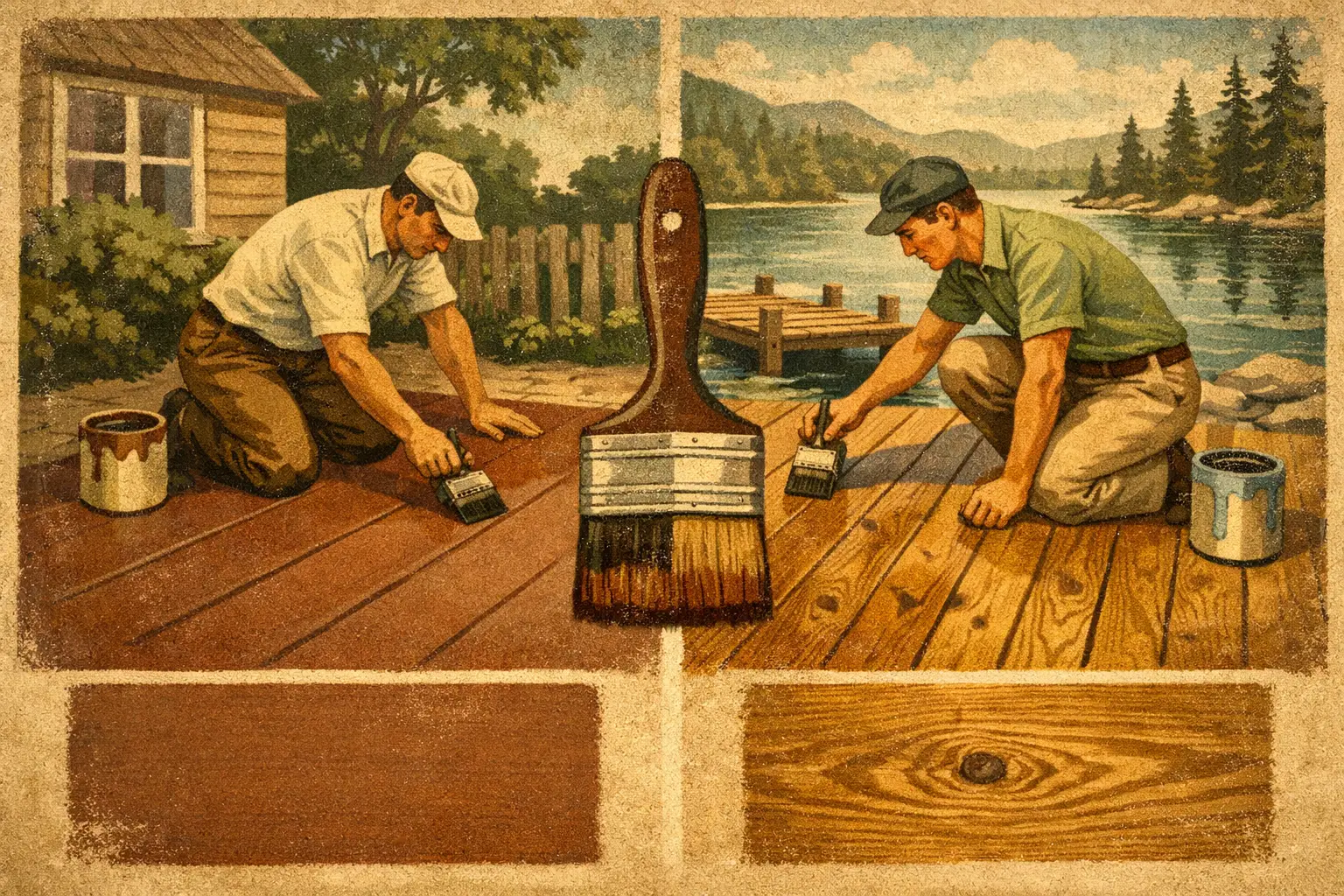
Transparent stain is designed to let the natural character of the wood remain front and center. It adds pigment and water resistance while allowing the grain, knots, and color variation beneath to show through. On attractive cedar, redwood, or newer pressure-treated lumber with a consistent appearance, that can be exactly the point.
Solid stain behaves more like a thin, protective paint film. It covers most of the grain and variation in the wood while still retaining a flatter, more wood-like appearance than many exterior paints. It is available in a much wider range of colors and is often the practical choice for aging surfaces with mismatched boards, old stain remnants, repairs, or visible discoloration.
Neither option is automatically better. Transparent stain celebrates the material. Solid stain provides more visual control and can be more forgiving when the material no longer looks uniform.
When Transparent Stain Is the Right Choice
Transparent stain is best suited to wood that deserves to be seen. A newer cedar deck, a well-maintained timber railing, or quality wood siding with rich natural variation can gain warmth and depth from a transparent finish without losing its character.
Because it contains less pigment than solid stain, transparent stain generally offers less ultraviolet protection. Sunlight is what turns wood gray, dries it out, and gradually weakens a finish. A lightly tinted transparent stain still helps, but it will not shield the wood as effectively as a more heavily pigmented product.
This makes exposure especially relevant around lakeside properties. A covered porch may hold a transparent finish well for years. A south-facing dock, deck, or exposed railing may require more frequent cleaning and reapplication. The maintenance interval also depends on drainage, snow buildup, foot traffic, nearby trees, and whether the surface was properly prepared before staining.
Transparent stain is a good fit when the wood is sound, relatively even in color, and not carrying a failing opaque coating. It is less successful when the surface has widespread graying, dark water marks, heavy repairs, or multiple boards that absorb stain differently. Transparent products do not hide those inconsistencies. They tend to emphasize them.
Transparent does not always mean clear
Stain terminology varies between manufacturers. A product labeled transparent may be nearly clear or may contain enough pigment to noticeably shift the wood tone. Semi-transparent stains sit between transparent and solid products, offering more color and UV resistance while allowing grain to remain visible.
For that reason, it is wise to test the selected stain on the actual wood. A sample board can help, but it does not always reveal how a weathered deck board or porous siding will absorb the finish. A small test area on the property provides a more reliable answer.
When Solid Stain Makes More Sense
Solid stain is often the sensible choice for wood that has already lived a hard outdoor life. It can bring order to a deck or siding project where boards vary in age, old stains have faded unevenly, repairs are visible, or water exposure has left permanent discoloration.
The added pigment creates stronger UV protection, and the finish gives owners a broader selection of colors. For a cottage exterior, that can mean coordinating a deck, trim, fence, or siding feature with the rest of the property while avoiding the heavy look of conventional paint.
Solid stain is particularly useful on vertical surfaces such as siding, fences, pergolas, railings, and stair risers. These areas benefit from a more uniform appearance, and they usually experience less abrasion than a walking surface. A deck floor is a different matter: solid stain is a film-forming coating applied to a horizontal surface that endures foot traffic, standing water, and freeze-thaw movement, and that combination makes it more prone to peeling than a penetrating stain. Once a solid-stain deck floor begins to fail, there is no simple recoat - the only reliable remedy is a full strip back to bare wood. For that reason, solid stain is best kept on railings, risers, and other vertical components, with a penetrating stain reserved for the walking surface itself.
The trade-off is simple: solid stain hides the grain. You may still see the texture of the boards, but the natural color variation and much of the wood pattern will be covered. If the appeal of your cedar is its distinctive grain, a solid finish can feel like too much coverage. If the same cedar is blotchy, sun-bleached, and patched from years of repairs, that coverage may be a relief.
The Existing Finish Can Decide the Project
One of the most common staining mistakes is choosing a new product based only on the desired appearance. The existing coating matters just as much.
If a surface has a sound solid stain, applying another compatible solid stain after proper cleaning and surface preparation is often straightforward. Moving from solid stain back to a transparent stain is far more demanding. The old opaque coating must be removed thoroughly enough to expose consistent bare wood. Spot stripping or light sanding will not create a uniform transparent result.
Likewise, a surface previously treated with a film-forming product may need more than a pressure wash. Loose material must be removed, edges feathered, and the wood cleaned of dirt, mildew, oils, and failed finish. Pressure washing alone can damage soft wood fibers or drive moisture into the boards if it is done carelessly.
Preparation is where long-term performance is won or lost. Wood should be clean, dry to the appropriate moisture level, structurally sound, and free of loose coating before stain is applied. End grain, joints, fastener areas, and horizontal ledges deserve particular attention because they are common entry points for moisture.
Oil-based and other penetrating stains also carry a fire risk that is easy to overlook once the project is done. Rags, applicator pads, and steel wool soaked with these products can generate their own heat as the oils cure and have been known to ignite on their own. Never bundle or bin them while wet. Lay used rags flat outdoors, spaced apart, until they are fully dry and stiff, or place them in a sealed metal container filled with water until they can be disposed of properly.
Consider the Surface, Not Just the Color
Decks, fences, siding, and docks do not age the same way. A deck takes foot traffic, furniture movement, spilled sunscreen, wet leaves, and snow. A fence may receive full afternoon sun on one side and shade on the other. Siding can remain protected beneath an overhang while nearby trim takes direct rain.
That is why one stain choice does not necessarily belong everywhere on a property. Transparent stain may be ideal for a covered cedar ceiling or decorative wood accent, while solid stain is a more durable visual solution for older siding or a heavily repaired fence. A coordinated color plan can still make those finishes feel intentional.
Also consider the wood species. Dense woods can resist stain penetration, while softwoods may absorb it quickly and unevenly. Pressure-treated lumber needs sufficient drying time before finishing. Newly installed wood may look ready for stain, but moisture trapped within it can interfere with adhesion and durability.
A Better Way to Make the Decision
Start with an honest look at the wood. If its grain and natural color are consistent enough to feature, transparent or semi-transparent stain is worth considering. If the surface is weathered, repaired, blotchy, or already opaque, solid stain may deliver the more polished result with less risk of visual disappointment.
Then look at the exposure. More direct sun and weather generally favor a product with more pigment and a maintenance plan that does not rely on wishful thinking. Finally, consider future upkeep. Transparent finishes can be easier to refresh when they wear evenly, but they may need attention sooner. Solid stains offer stronger coverage, yet peeling or adhesion problems can create more involved preparation later if the coating system was poorly chosen or applied.
At Roll On Painting, stain recommendations are based on the condition of the wood and the demands of the property, not a one-size-fits-all finish. That includes evaluating moisture exposure, existing coatings, surface preparation, and the level of maintenance an owner can reasonably expect.
The best stain is the one that respects both the wood and the way the property is used. Choose transparent stain when the grain is an asset worth protecting in plain sight. Choose solid stain when consistent color, stronger concealment, and a more uniform finish will better preserve the appearance of the surface over time.