
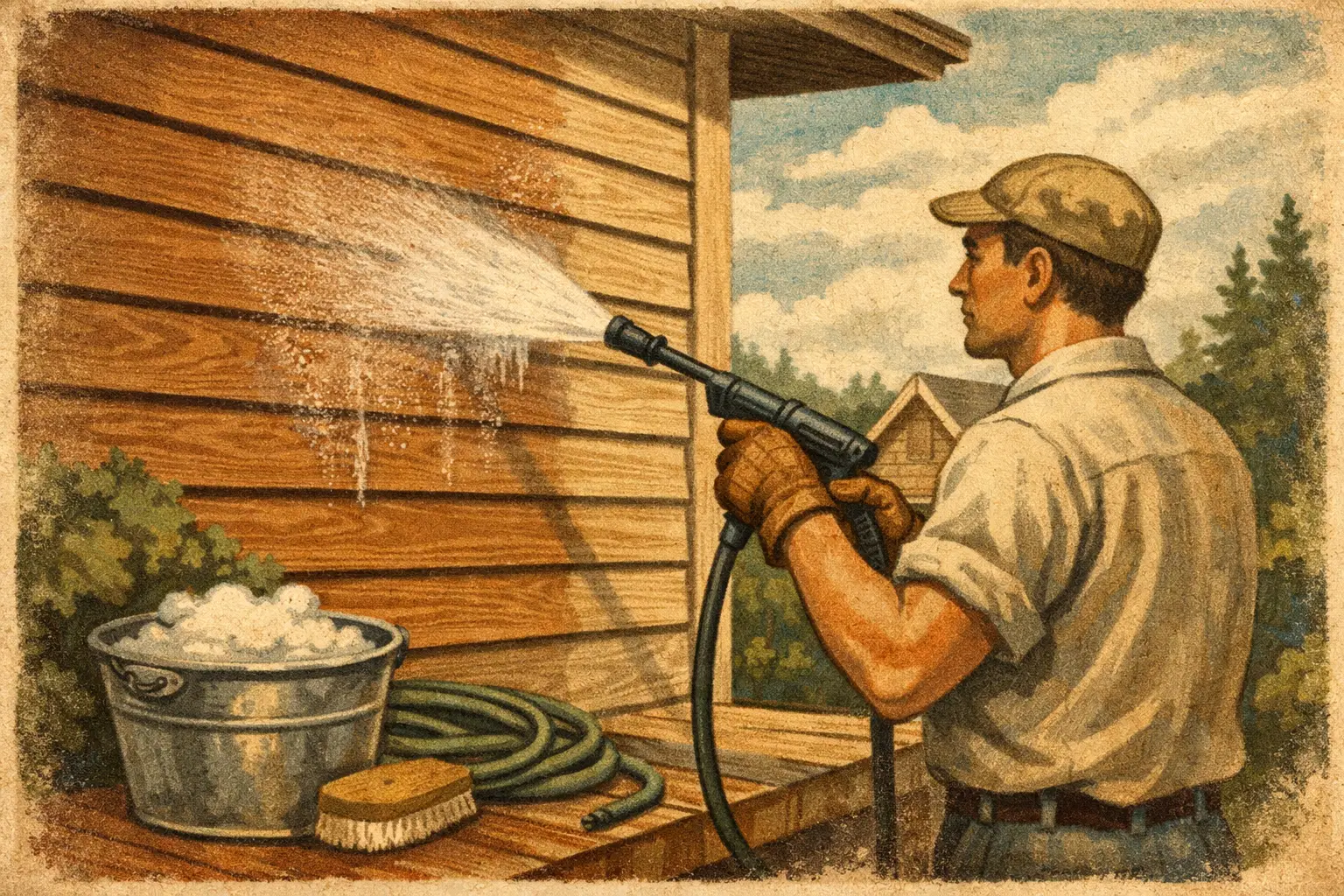
How to Wash Cedar Siding Without Causing Damage
Cedar siding earns its place on a home or cottage because it has warmth, texture, and real character. It also needs a gentler cleaning method than vinyl, brick, or fiber cement. Knowing how to wash cedar siding protects the wood grain, preserves stain or paint adhesion, and helps you catch small maintenance concerns before Muskoka weather turns them into costly repairs.
The goal is not to blast the siding until it looks raw and new. The goal is to remove surface dirt, pollen, mildew, cobwebs, and organic buildup while keeping water out of laps, joints, end grain, and window trim. A careful soft-wash approach produces a cleaner property without shortening the life of the siding or its finish.
Inspect Cedar Before You Start
Walk the exterior in good daylight before bringing out a hose or cleaner. Look closely at the lower courses of siding, shaded walls, areas beneath eaves, and sections near gardens or trees. These are the places most likely to collect moisture, mildew, and debris.
Pay attention to cracked boards, lifted caulking, failed sealant around windows, peeling paint, worn stain, exposed fasteners, and soft or darkened wood. Cleaning will not repair failed coatings or decayed cedar. In fact, applying water to an already compromised area can reveal why it needs attention.
If the siding has a transparent or semi-transparent stain, expect some natural variation in color. Cedar weathers unevenly, especially on cottages surrounded by trees or exposed to lake conditions. Washing can remove grime, but it will not make sun-faded sections match protected areas. That distinction matters when deciding whether cleaning is enough or whether the siding should be professionally restored and recoated.
How to Wash Cedar Siding Safely
Start with the least aggressive method that will do the job. For routine cleaning, a garden hose, a soft-bristle exterior brush, a bucket, and a siding-safe cleaner are usually enough. Avoid wire brushes, abrasive pads, and strong degreasers. They can scar soft cedar fibers or damage the existing coating.
Choose a cleaner suited to the issue you see. A mild exterior wash is appropriate for dust, pollen, and general grime. For mildew or algae, use a product specifically labeled for exterior wood and follow its dilution and dwell-time instructions exactly. Do not assume that a stronger mix is better. Overly harsh cleaners can bleach the wood, leave patchy results, or interfere with a future stain application.
Before cleaning an entire wall, test your solution on a small, inconspicuous section. This gives you a chance to confirm that it lifts the buildup without changing the color or sheen of the finish. Testing is especially worthwhile on older siding, dark stains, and clear-coated cedar.
Work in manageable sections, ideally on an overcast day. Direct hot sun can dry cleaning solution too quickly, leaving residue or uneven results. Wet the section lightly first, apply the cleaner from the bottom upward to reduce streaking, and let it sit only as long as the manufacturer directs. Then gently agitate stubborn areas with a soft brush, following the direction of the wood grain.
Rinse thoroughly from the top down with a regular hose spray. Keep the stream angled downward, never upward beneath siding laps or trim details. The same principle applies around windows, doors, vents, and horizontal joints: water should run off the building, not be forced behind the exterior surface.
Should You Pressure Wash Cedar Siding?
Pressure washing is where otherwise careful property owners can get into trouble. Cedar is a soft wood, and too much pressure can fur the grain, create visible wand marks, strip stain, gouge the boards, and push water into the wall assembly. Damage may not be obvious until the siding dries.
For that reason, standard high-pressure washing is not our first choice for cedar. Soft washing is usually safer because it relies on an appropriate cleaning solution, gentle agitation where needed, and low-pressure rinsing rather than brute force.
There are situations where a trained technician may use a pressure washer at very low pressure, with a wide fan tip and disciplined technique. Even then, the operator must maintain a safe distance, keep the spray moving, and direct water downward. This is not the place for a narrow tip, close-range spraying, or an attempt to remove old stain with water pressure alone.
If the siding has heavy oxidation, deeply embedded staining, peeling coating, or visible mildew across broad sections, the right answer may be a professional assessment rather than more pressure. The surface may need cleaning followed by sanding, spot priming, staining, or repainting to achieve a finish that looks consistent and lasts.
Protect Landscaping, Windows, and Nearby Surfaces
Cedar cleaning affects more than the wall itself. Move outdoor furniture, cushions, firewood, and décor away from the work area. Always pre-wet and cover nearby plantings before washing begins, regardless of the cleaner's instructions, and rinse landscaping again thoroughly once the work is complete. Keep cleaning solutions off natural stone, unfinished metal, and painted surfaces unless the product is approved for them.
Close windows and doors, and check that screens and weatherstripping are secure. On cottage properties, do not overlook exterior electrical outlets, light fixtures, propane connections, and storage areas tucked beneath decks or porches. A clean job site is part of doing the work properly.
Let the Cedar Dry Before Making Finish Decisions
After washing, give cedar enough time to dry fully before applying stain, paint, caulk, or a protective treatment. The exact drying time depends on temperature, humidity, shade, and how much moisture the wood absorbed. In humid or wooded areas, a wall can look dry on the surface while still holding moisture deeper in the boards.
Rushing this step can trap moisture under a new coating and lead to premature peeling, blistering, or adhesion failure. If you plan to refinish the siding, moisture testing is the most reliable way to confirm that the wood is ready. This is especially valuable on lakefront homes and seasonal properties, where sun exposure and moisture levels can vary dramatically from one elevation to another.
Once dry, assess the finish honestly. If the siding is clean but the stain is intact, washing may be all it needs. If bare wood is visible, water no longer beads on the surface, or the coating is worn away in traffic and weather zones, schedule maintenance before the cedar starts absorbing water more aggressively.
A Sensible Cleaning Schedule for Cedar
Cedar siding should generally be washed from late spring through early fall, when there is enough warm, dry weather left afterward for the wood to dry fully before any stain, paint, or protective coating is applied. Most cedar siding benefits from a light inspection each spring and a gentle wash as needed, often every one to three years. The schedule depends on tree cover, lake exposure, nearby roads, roof runoff, and the type of finish on the wood. A shaded wall beneath mature trees may need attention sooner than a sunny, well-ventilated wall.
Avoid treating annual washing as a fixed rule. Unnecessary cleaning can wear a finish prematurely, while delayed cleaning allows organic growth to hold moisture against the wood. The better approach is condition-based maintenance: clean when buildup is visible, inspect the coating regularly, and address failed caulking or finish wear before water gets behind the siding.
For high-value homes and cottages, professional cleaning is often the lower-risk option when access is difficult, surfaces are heavily weathered, or a recoating project is likely. Roll On Painting approaches cedar care as part of a complete exterior protection plan, with careful preparation, tidy work practices, and the judgment to recognize when washing should lead to refinishing rather than more cleaning.
Cedar rewards restraint. Use a gentle method, keep water moving in the right direction, and let the condition of the wood guide the next step. That care helps the siding continue to look right at home among the trees, stone, and water that make a property worth protecting.