
Washing Mould From Exterior Surfaces Safely
A dark green film on cottage siding is rarely just a cosmetic issue. In Muskoka, shade from mature trees, lake humidity, wind-driven rain, and long winters can keep exterior materials damp long enough for organic growth to take hold. Washing mould from exterior surfaces is one of the most effective ways to restore curb appeal and protect the finish underneath, but the wrong method can scar wood, force water behind siding, or shorten the life of a coating.
For property owners, the goal is not simply to make a wall, deck, or stone path look clean for a weekend. It is to remove growth carefully, preserve the substrate, and create the right conditions for a durable repaint, stain, or protective treatment.
Why exterior growth is common in Muskoka
People often call every dark or green mark "mould." Outdoors, it may be mould, mildew, algae, lichen, or a mixture of organic growth and airborne dirt. The distinction matters less than the surface involved and the cleaning method used. All of it can hold moisture against paint, stain, wood, masonry, and composite materials.
North- and east-facing walls usually show the problem first because they receive less direct sunlight. Areas beneath eaves, around gutters, near downspouts, behind planters, and beside dense landscaping are also common trouble spots. On waterfront properties, the combination of moisture and tree cover can make regular maintenance especially worthwhile.
A light surface film may be manageable with routine soft washing. Thick growth, peeling paint, soft wood fibers, stained masonry, or recurring black marks call for a closer assessment. Cleaning alone will not correct a drainage problem, failed caulking, a leaking gutter, or a coating that has reached the end of its service life.
Start with the surface, not the machine
Pressure washers are useful tools, but they are not a universal answer. Water pressure that is appropriate for concrete can damage cedar siding, lift deck stain, dent aluminum, etch softer brick, and drive moisture where it does not belong. A surface can look clean immediately after aggressive washing while carrying damage that appears later as peeling paint, raised grain, or water staining.
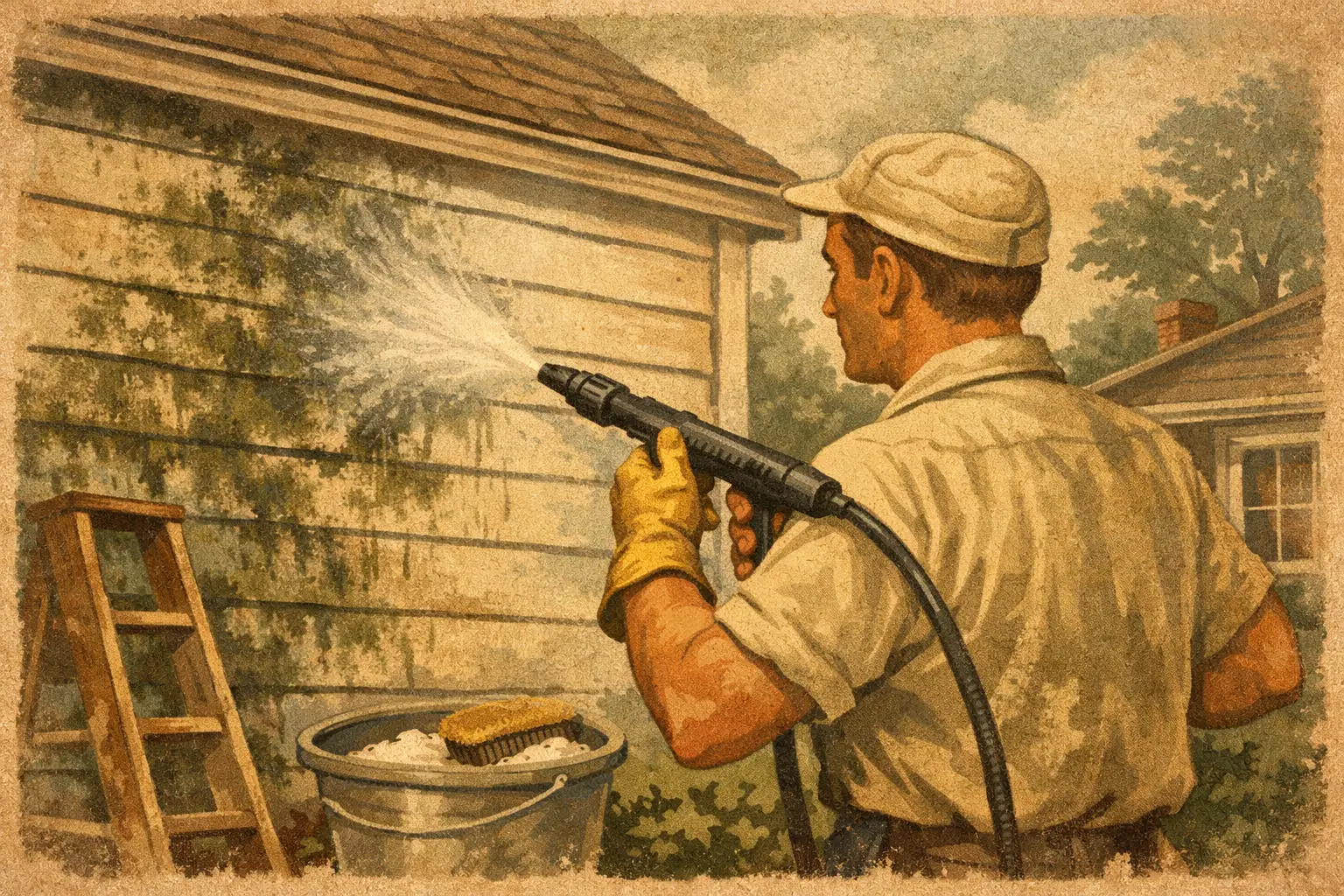
For painted siding, trim, soffits, and many delicate exterior finishes, soft washing is generally the safer approach. This uses a compatible cleaning solution, low-pressure application, sufficient dwell time, and a controlled rinse. The cleaner does the work rather than the force of the water.
Decks require similar care. Wood fibers are easily shredded by excessive pressure, particularly on older boards or softer species. Once the grain is raised, the deck can feel rough, absorb moisture more readily, and require additional sanding before staining. Composite decking has different concerns: harsh chemicals or incorrect pressure can affect the surface finish and may conflict with the manufacturer’s maintenance guidance.
Masonry and concrete can tolerate more pressure than painted wood, but they still need judgment. Mortar joints, natural stone, pavers, and older brick can be vulnerable to erosion or discoloration. A professional should test a discreet area and adjust the method before cleaning a large visible section.
A better sequence for washing mould from exterior surfaces
A sound exterior-cleaning process begins with inspection. Check for loose paint, open joints, damaged boards, decayed wood, loose mortar, and areas where water is entering or collecting. These conditions should be documented and addressed rather than washed over.
Next, protect nearby landscaping and exterior features. Plants should always be pre-wet before cleaning and rinsed thoroughly again afterward, regardless of what the product label says, while windows, electrical fixtures, outdoor furniture, and vulnerable materials are handled with care. A quality cleaning crew also keeps runoff, overspray, and access around the property under control, directing it away from the shoreline, storm drains, and the septic bed rather than letting it pool or run toward them. At a cottage, that matters just as much as the clean result: docks, outdoor kitchens, screened rooms, and landscaped paths deserve protection.
The cleaning solution should be selected for the material and the level of growth. After application, it needs enough contact time to break down the organic film without drying on the surface. The area is then rinsed thoroughly at the appropriate pressure, from a safe distance and angle. Stubborn areas may need a second targeted treatment rather than a stronger blast from the washer.
Finally, allow the surface to dry fully. This is essential when painting, staining, caulking, or applying a protective coating is planned. Applying a finish over damp siding or decking can trap moisture and compromise adhesion.
Why household bleach is not always the answer
Bleach is often suggested as a quick fix for exterior mould and mildew. It can brighten certain surfaces, but it is not automatically the best or safest choice. Most soft-wash solutions used for this kind of cleaning are a dilute sodium hypochlorite bleach solution combined with a surfactant to help it cling to vertical surfaces and penetrate growth. Strong mixtures may affect plants, damage surrounding materials, fade finishes, and leave uneven results if applied carelessly. It can also be less effective where growth is embedded in porous surfaces or where the underlying moisture source remains.
The best cleaner depends on the substrate, existing coating, severity of growth, and nearby landscape. A contractor should understand how the cleaning chemistry interacts with paint, stain, wood, masonry, and runoff conditions. This is one reason professional exterior washing is more than arriving with a pressure washer and a chemical jug.
If you choose to handle a small area yourself, use an exterior cleaner labeled for the exact material, follow its dilution and safety instructions, and test a hidden spot first. Wear chemical-resistant gloves, protective clothing, and sealed eye protection, along with a respirator that is properly fitted and suited to the product being used. A basic dust mask is not adequate protection against chlorine vapour and should not be relied on. Never mix cleaning products, and never combine these cleaners with ammonia-based or acidic cleaners, since the reaction can produce dangerous fumes. If there is any uncertainty about the coating, especially on a premium painted finish, cedar, or aged deck, stop before a small maintenance task becomes a repair project.
Cleaning before painting or staining
Exterior washing is a critical preparation step before painting, but it is only one step. Paint does not adhere reliably to chalking surfaces, loose old coatings, damp wood, or residue left behind by cleaning products. After washing, a proper painting scope may also include scraping, sanding, spot priming, caulking, wood repair, and moisture checks.
Paint in buildings finished before about 1980 should be assumed to contain lead. Have it tested before scraping or sanding, and avoid dry sanding, power sanding or heat stripping; if lead is present the work needs wet methods, containment and HEPA cleanup, or a contractor equipped for it.
This is where a low price can become expensive. A contractor who washes and paints in a rushed sequence may deliver a clean-looking surface at first, only for the new finish to peel prematurely. Careful preparation takes more time, but it protects the investment in premium coatings and skilled application.
For decks and fences, timing matters. The wood needs to be sufficiently dry before stain is applied, and weather conditions must support the product’s curing requirements. In cottage country, planning around rain, overnight temperatures, shade, and seasonal use of the property can make a meaningful difference to the final result.
Reduce how quickly mould comes back
No cleaning method can permanently prevent organic growth on a shaded, moisture-exposed property. It can, however, be slowed significantly with a few practical corrections. Keep gutters clean and direct downspouts away from walls and deck posts. Trim vegetation back from siding so air can circulate. Move planters and stacked items away from exterior walls, and avoid letting wet leaves collect on decks, steps, or roof-adjacent surfaces.
Pay attention to finish condition as well. Sound paint, stain, and protective coatings shed water more effectively than worn, porous surfaces. When a finish begins to fail, it gives moisture and organic growth more places to settle. Regular maintenance is usually less disruptive and less costly than waiting for widespread deterioration.
Many Muskoka homeowners schedule exterior cleaning in spring to remove winter buildup and again as needed before seasonal closing or a painting project. The ideal frequency depends on shade, lake exposure, surrounding trees, the material, and how the property is used. A sunny suburban facade may need far less attention than a deeply shaded waterfront cottage.
When professional washing is the sensible choice
Professional help is particularly valuable when growth covers high siding, steep roof-adjacent areas, large decks, multiple exterior materials, or surfaces that will be repainted. It is also the safer choice when you see peeling coatings, wood rot, persistent moisture marks, loose trim, or growth that returns quickly after cleaning.
Roll On Painting approaches exterior washing as part of a complete surface-care system, not a standalone blast of water. With more than 25 years of finishing experience, insured and WSIB-covered crews, and careful preparation standards, the focus is on clean surfaces without unnecessary risk to the property. That may include soft washing, targeted pressure washing where suitable, finish assessment, and a clear recommendation for painting, staining, or protection when cleaning alone is no longer enough.
A well-maintained exterior should look cared for without showing the damage of over-cleaning. Treat early growth before it becomes entrenched, correct the moisture conditions that feed it, and choose a cleaning method that respects the surface you paid to protect.