
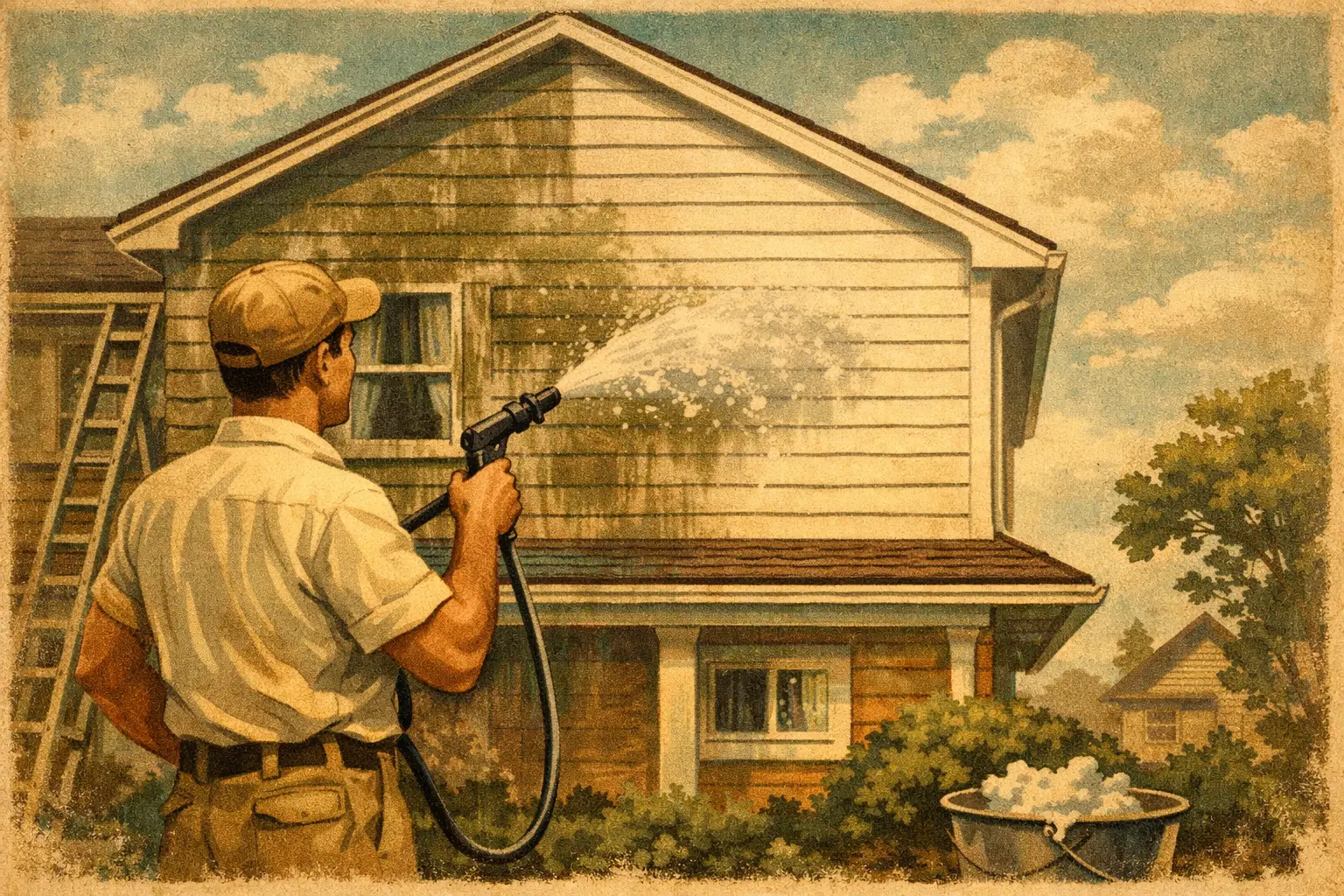
Soft Washing House Siding: A Gentler Way to Clean
A dark green film on the shaded side of a cottage is not just a cosmetic problem. Algae, mildew, pollen, and airborne grime hold moisture against the exterior, dulling paint and making a well-kept property look neglected. Soft washing house siding is the controlled way to remove that buildup without using the aggressive pressure that can scar wood, force water behind cladding, or strip a weathered finish.
For Muskoka homes and cottages, the right cleaning method matters. Long wet seasons, tree cover, lake humidity, and seasonal vacancy create ideal conditions for organic growth. A professional wash should restore the appearance of the siding while respecting its age, material, caulking, paint system, landscaping, and the areas around windows and doors.
What Soft Washing House Siding Actually Means
Soft washing uses a low-pressure application of a siding-appropriate cleaning solution, followed by a gentle rinse. The solution does the cleaning work by breaking down organic growth and lifting surface contamination. Pressure is kept low enough to avoid treating the siding like a driveway. The cleaning solution should never be mixed with ammonia-based or acidic cleaners, since combining them can produce dangerous fumes. Because overhead spray on tall walls tends to run back down the wand toward the operator, sealed eye protection is mandatory, not optional, throughout the wash.
That distinction is especially valuable on painted wood, cedar, fiber-cement, older vinyl, and composite siding. High-pressure washing can drive water into seams, raise wood grain, damage trim, dislodge loose caulk, and leave visible wand marks. It may make a surface look clean for a moment while creating repair work that only becomes apparent later.
Soft washing is not simply “pressure washing turned down.” It is a method that starts with material identification, solution selection, protection of surrounding surfaces, controlled dwell time, and a careful rinse. Results depend on preparation and judgment as much as the equipment being used.
Why Cottage Exteriors Need a Gentler Approach
A cottage exterior often has more vulnerable details than a typical suburban façade. There may be stained wood siding beside painted trim, screens, stonework, exposed fasteners, older window seals, deck railings, or landscaping close to the wall. Each surface responds differently to water, cleaners, and pressure.
Wood deserves particular caution. If it has been neglected, the surface may already be dry, weathered, or beginning to lose its protective coating. Excess pressure can cut into soft grain and turn a cleaning project into a refinishing project. Soft washing removes biological growth without needlessly eroding the surface.
Vinyl siding has its own risks. It can trap water behind loose panels, and oxidation on older vinyl can show streaking if the surface is scrubbed or rinsed carelessly. Fiber-cement is durable, but its paint film, joints, and penetrations still need to be handled correctly. The safest approach depends on the condition of the siding, not just its label.
What a Professional Cleaning Process Looks Like
A quality result starts before any water reaches the building. The crew should inspect the siding for peeling paint, failed caulking, open joints, soft wood, loose panels, damaged screens, and areas where water could enter. Cleaning will reveal existing defects, but it should not worsen them.
Nearby plants, outdoor furniture, electrical fixtures, cameras, and delicate finishes need protection. Plantings should always be pre-wet and covered before the solution is applied, and rinsed again thoroughly once the wash is complete, regardless of what the product label says. Windows and doors are checked for openings and compromised seals. On a seasonal property, this step can be particularly important because a small maintenance issue may have gone unnoticed since the last visit.
The cleaning solution is then applied at an appropriate strength for the amount of growth and the surface being treated. Light pollen and general grime do not call for the same approach as heavy algae or mildew. Allowing the product to dwell for the proper time lets it work without excessive agitation.
Afterward, the siding is rinsed with controlled, low-pressure water. The objective is to remove residue and contamination thoroughly, not blast the wall clean. A professional will work methodically around trim, soffits, vents, windows, and transitions between materials, then inspect the exterior again once it has dried.
When Soft Washing Is the Right Choice
Soft washing is usually the preferred option when siding has organic growth, widespread dirt, cobwebs, pollen staining, or dullness from a damp and tree-covered setting. It is also a wise maintenance step before exterior painting or staining. Paint adheres better to a properly cleaned, dry surface, and a fresh coating is less likely to trap contaminants beneath it.
There are exceptions. Heavy oxidation, failing paint, deep tannin stains, rust marks, or bare, severely weathered wood may need additional preparation beyond washing. A dirty surface can be cleaned, but cleaning alone cannot repair coating failure or restore wood that has lost its protective finish.
Pressure washing can still have a place on durable hardscapes and some exterior surfaces when performed by a skilled operator at the right setting. The issue is not that pressure is always wrong. The issue is using high pressure where a gentler chemical-cleaning process is safer and more effective.
Common Mistakes That Put Siding at Risk
The most frequent mistake is treating every exterior surface the same. A rental-grade pressure washer can be useful, but the wrong tip, distance, or angle can gouge wood and force water behind siding in seconds. Cleaning upward into laps or seams raises the risk further.
Another mistake is using a strong cleaner without protecting vegetation or rinsing thoroughly. Cleaning products must be selected and handled carefully, with attention to runoff, nearby gardens, lake-adjacent conditions, and the manufacturer guidance for the siding and its coating. More chemical is not automatically better.
Homeowners also sometimes wash siding immediately before painting without allowing enough drying time. Exterior coatings need a clean, dry, stable surface. If moisture remains in wood or behind laps, the new finish may blister, peel, or fail prematurely. The proper schedule depends on the siding material, weather, humidity, and the extent of washing.
How Often Should You Soft Wash Siding?
In Ontario, the practical washing season runs from late spring to early fall, when there is enough warm, dry weather for the siding to dry fully afterward rather than at any time of year. For many properties, every one to three years is a sensible range within that window. Shaded elevations, walls under heavy tree cover, and lakefront cottages may need attention more often than sunny, open exposures. A spring walk-around is usually enough to identify early algae, mildew, spider webs, pollen residue, or staining before it becomes established.
Regular maintenance is generally easier on an exterior than waiting for heavy buildup. It also gives property owners an opportunity to spot failing caulk, loose trim, damaged paint, and moisture concerns early. On a high-value home or cottage, those small findings can prevent a more expensive repair cycle.
Cleaning Before Painting or Staining
Soft washing is one part of proper exterior preparation, not a substitute for it. Before repainting, a contractor may also need to scrape and sand failed paint, spot-prime bare areas, replace deteriorated wood, reset fasteners, repair caulking, and mask adjacent surfaces. The cleaning stage removes contamination so those repairs and coatings can perform as intended.
This is where experienced surface preparation has real value. A clean wall can still have hidden substrate issues, and a new coat of paint cannot correct water damage or unstable old finishes. Roll On Painting approaches exterior cleaning with the same care used for painting and refinishing: protect the property first, prepare thoroughly, and recommend the work that the surface actually needs.
A clean exterior changes how a property feels when you arrive for the weekend, welcome guests, or prepare it for sale. More importantly, careful soft washing gives you a clearer view of the condition beneath the grime - and the chance to protect that investment before minor weathering becomes a larger project.