
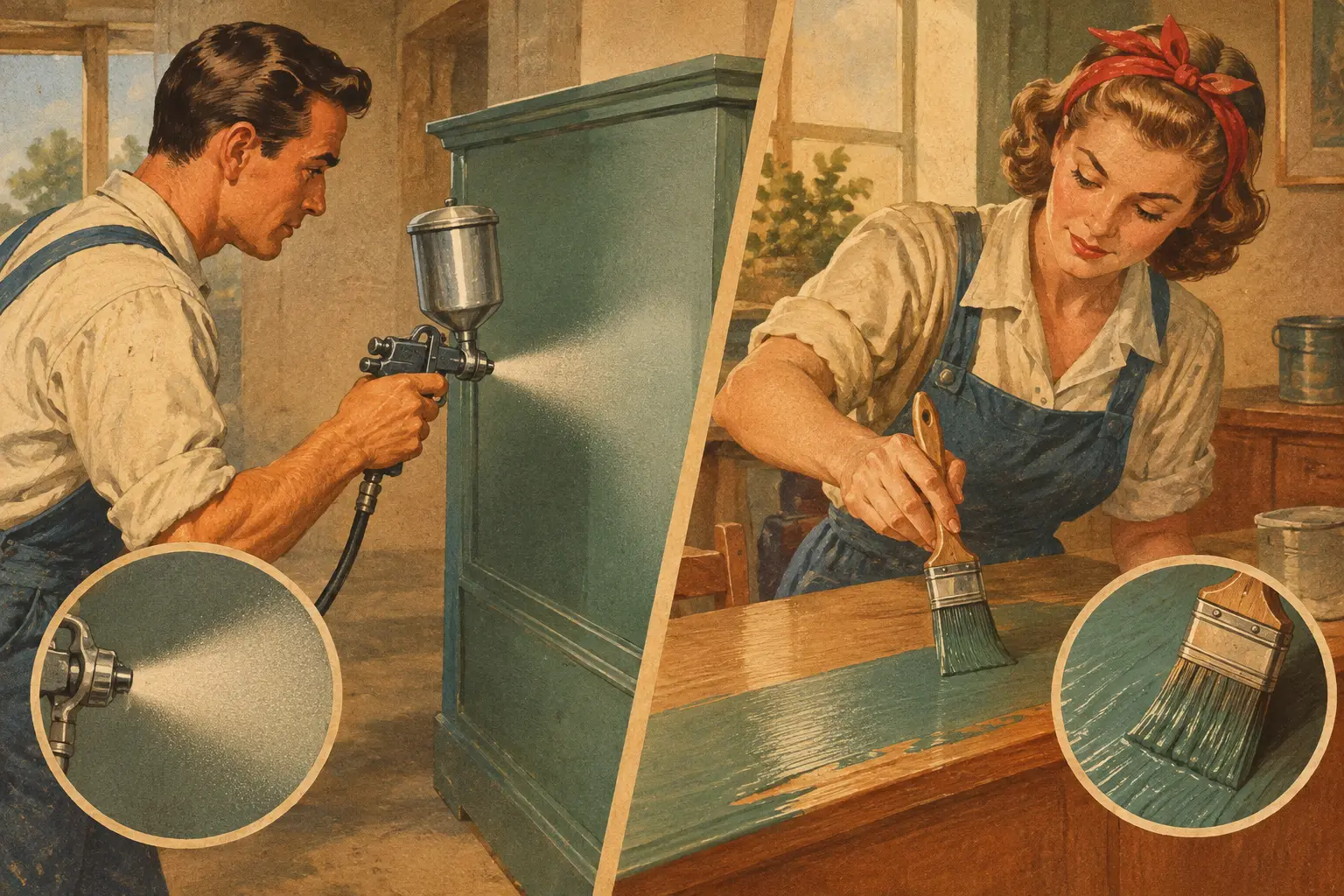
Spray Painting Versus Brush Painting Compared
A kitchen cabinet door, a cottage ceiling, and a cedar-sided boathouse may all need paint, but they do not need the same application method. Spray painting versus brush painting is not a contest with one universal winner. The right choice depends on the surface, the coating system, the desired finish, site conditions, and how much protection the surrounding property requires.
For Muskoka homeowners and cottage owners, that distinction matters. A beautiful finish has to hold up through changing humidity, busy summer use, seasonal shutdowns, and exposure to sun, rain, and snow. The application method should support the coating, not simply make the job look faster.
Spray Painting Versus Brush Painting for Finish Quality
Spraying applies paint in a fine, even mist. On properly prepared, smooth surfaces, it can create an exceptionally uniform finish with little visible texture. This is why professional spraying is often the preferred method for cabinet doors, millwork, interior doors, detailed trim, smooth ceilings, and pre-finished new-construction materials. It is especially valuable when a consistent factory-style appearance is the goal.
Brush application leaves a subtle hand-applied texture, even in skilled hands. That is not always a drawback. On older woodwork, textured siding, rough-sawn lumber, and surfaces with character, a brush finish can look appropriate and help work coating into small imperfections and grain. Quality brushes and the right paint additives can reduce brush marks considerably, but they will not produce the same level of uniformity as a well-executed sprayed finish.
A roller also has an important role in this comparison. Large wall areas are frequently rolled and then brushed at edges and details, or rolled and back-brushed for a more even result. For many occupied interiors, this combination provides an excellent finish while keeping containment and disruption manageable.
The Preparation Behind a Clean Sprayed Finish
Spraying does not eliminate preparation. It raises the standard for it. A spray gun can reveal dust, dents, lap marks, loose caulking, and poor sanding more clearly than a brush ever will. Before spraying cabinets, trim, or doors, the surface needs careful cleaning, patching, sanding, priming, and dust removal. The coating must also be selected and adjusted for the equipment, temperature, and humidity.
Just as critical is containment. Professional spray work calls for masking windows, hardware, floors, fixtures, adjacent rooms, landscaping, and nearby vehicles as needed. Air movement must be controlled, and overspray risk must be taken seriously. On an exterior project, wind direction can make spraying impractical even when the forecast looks favorable.
Brush painting also requires thorough preparation, particularly where peeling paint, weathered wood, failed caulk, or moisture damage is present. Its advantage is that it can be more controlled in tight areas. A painter can cut around stone, windows, hardware, and landscaping with less masking than a full spray setup requires. Less masking does not mean less care. It simply changes where the labor goes. Paint in buildings finished before about 1980 should be assumed to contain lead. Have it tested before scraping or sanding, and avoid dry sanding, power sanding or heat stripping; if lead is present the work needs wet methods, containment and HEPA cleanup, or a contractor equipped for it.
Speed Is More Than Time With a Paint Gun
Spraying covers broad, open surfaces quickly. When several doors, cabinet components, shutters, lengths of trim, or pre-finished boards are ready at once, the production advantage can be significant. In a controlled shop setting, sprayed pre-finishing can also protect materials before installation and avoid the delays that come with finishing every piece on site.
However, setup and cleanup take time. Masking a furnished room or a detailed exterior can be extensive. If a small repair involves one wall, a few trim boards, or a narrow section of siding, brush and roller work may be more efficient from start to finish.
The fastest method is therefore not always the one that applies paint fastest. It is the method that delivers the required finish without creating extra site protection, cleanup, touch-up, or scheduling work.
Where Each Method Usually Makes Sense
Spraying is often a strong choice for smooth, repeatable components and open areas where containment is practical. Cabinet refinishing, new interior doors, trim packages, paneling, ceilings, and pre-finished siding or millwork are common examples. A spray application can make these surfaces look crisp and cohesive, particularly when paired with the right primer and finish coat.
Brush painting is often the better fit for detailed exterior repairs, lattice, railings, irregular wood siding, fence sections, and projects where access is limited. It is also useful where paint needs to be worked into wood grain, joints, and small crevices. On older cottages, hand application can provide the control needed to coat complex details without forcing paint into places it does not belong.
Decks deserve particular care. A deck coating or stain needs to penetrate and bond correctly, and the material may need to be brushed into boards, end grain, and gaps. Spraying can be used in selected situations, but it should not lead to puddling, missed edges, or product waste. The condition of the wood, the product manufacturer’s instructions, and the weather window should drive the decision.
Durability Comes From the System, Not the Tool Alone
A sprayed coat is not automatically more durable, and a brushed coat is not automatically thicker or better protected. Longevity depends on surface preparation, moisture conditions, primer selection, coating compatibility, film thickness, and proper drying time between coats.
Professional painters may spray a coat for consistency and then back-brush or back-roll it where extra penetration or coverage is needed. This is common on porous exterior materials and can be useful on surfaces where paint must be worked into the texture rather than sit across the top of it.
For wood siding, trim, decks, and other weather-exposed Muskoka surfaces, the most costly failure is often not a visible brush mark. It is a coating applied over dirt, moisture, loose paint, or failing caulk. That is why washing, scraping, sanding, spot priming, and repairs deserve as much attention as the final application method.
Muskoka Conditions Change the Calculation
Cottage country presents practical challenges that a generic painting recommendation can miss. A property may be surrounded by mature trees that shed pollen and debris. Lakeside wind can shift quickly. Seasonal buildings may have cool interiors, variable humidity, or limited ventilation. Exterior projects also need a realistic weather window for preparation, application, and cure time.
Spraying near a lakefront, dock, stonework, or landscaped property calls for disciplined containment and close weather monitoring. A brush-and-roll approach may offer more control when wind or access creates risk. Conversely, removing cabinet doors or trim for controlled shop spraying can reduce disruption inside a furnished cottage and produce a more refined finish than trying to spray around occupied rooms.
The best approach is often a combination. Doors may be sprayed, walls rolled, trim brushed or sprayed depending on access, and exterior details finished by hand. Selecting methods surface by surface is a mark of careful project planning, not inconsistency.
Choosing a Painter Who Can Use Both Methods Well
The question to ask is not simply, “Do you spray?” Ask how the contractor will protect your home, prepare the surface, control dust and overspray, choose the coating, and handle touch-ups after the work is complete. A painter who only favors one method may be trying to fit every project to the same process.
Roll On Painting evaluates the finish goal, property conditions, and maintenance needs before recommending an approach. With more than 25 years of experience, $5 million insurance coverage and WSIB coverage, the focus is on a finish that looks right and remains protected. Roll On Painting warrants its workmanship for three years from substantial completion. Decks, docks, railing caps and runoff zones are not covered, and other exclusions apply — the written terms set them out. Separately, our Perfect Finish Promise provides two hours of complimentary touch-ups per year of ownership as a goodwill courtesy; unused hours do not carry over.
If you are planning a cabinet update, a cottage repaint, or exterior maintenance before another Muskoka season, start with the condition of the surface and the result you expect to see years from now. The right application method will follow from there.