
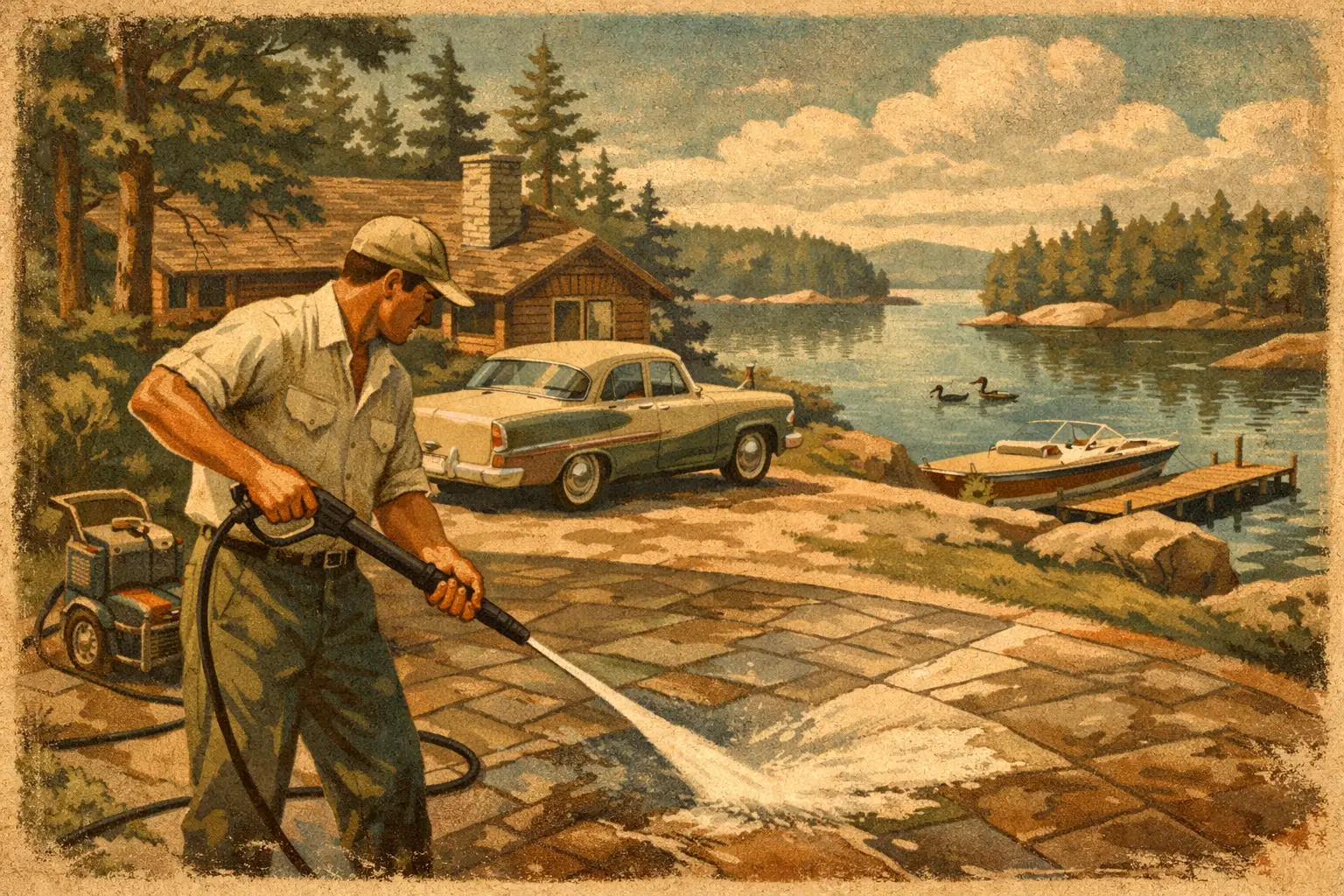
Pressure Washing Your Driveway in Muskoka
A Muskoka driveway works harder than it looks. It collects winter sand and road salt, spring runoff, pine needles, algae, tire marks, and the fine dust that follows cottage traffic all season. Professional pressure washing driveway Muskoka properties is not simply about making the entrance look cleaner for guests. Done with the right equipment, water pressure, and preparation, it removes contaminants that can make paved surfaces slippery, stained, and prematurely weathered.
For homeowners, cottage owners, and property managers, the goal is a clean, orderly approach to the property without creating damage at the garage door, landscape beds, stonework, or nearby siding. That requires more judgment than pointing a high-pressure wand at the pavement.
Why Muskoka Driveways Need More Than a Quick Rinse
Muskoka's weather creates a demanding cycle for concrete, asphalt, interlock, and exposed aggregate. Moisture settles into pores and joints. Freezing temperatures expand that moisture. Sand, salt, organic debris, and vehicle fluids remain on the surface long after the snow has gone. By late spring, a driveway can look dull and uneven even when it is structurally sound.
Pressure washing removes the visible layer of grime, but the more valuable work is addressing what has settled into the surface. Algae and mildew tend to develop in shaded areas, particularly near trees, retaining walls, and the north side of a home or cottage. These growths hold moisture and create a slick surface underfoot. Oil spots, leaf tannins, rust stains, and tire residue often need more than water alone.
A properly cleaned driveway improves curb appeal immediately, but it also gives property owners a clearer view of the pavement's actual condition. Hairline cracks, failing joint sand, loose pavers, drainage issues, and deteriorating sealant are easier to identify once the accumulated dirt is gone.
Pressure Washing Driveway Muskoka Surfaces Safely
Not every driveway should be cleaned at the same pressure. This is where many do-it-yourself jobs go wrong. High pressure can strip surface paste from aging concrete, etch exposed aggregate, dislodge joint material between pavers, or scar asphalt. A surface may look clean at first, then show permanent wand marks once it dries.
The right method depends on the driveway material, its age, the staining present, and the surrounding conditions. A newer concrete driveway may tolerate a more thorough surface-cleaner pass than older, cracked concrete. Asphalt needs a more controlled approach, since aggressive pressure can remove loose material and accelerate wear at weak edges. Interlock requires special care around joints, followed by appropriate joint-sand replacement where needed.
Professional cleaning also considers where the water goes. A driveway often slopes toward gardens, lake-adjacent areas, drainage channels, or a garage. Cleaning solutions, runoff, and loosened debris should be managed responsibly, not pushed into a planting bed or toward a waterway. This matters across Muskoka, where many properties have mature landscaping and close proximity to lakes, docks, and natural shorelines.
The Difference Between Pressure and Technique
Pressure alone does not produce a better result. Water volume, nozzle selection, working distance, dwell time for cleaners, and a consistent cleaning pattern all affect the finish. A commercial surface cleaner can provide a more even result across broad concrete areas than a narrow wand pass, while detail work around edges, steps, and garage thresholds calls for controlled hand work.
Stains also need to be treated according to their source. Degreasing an oil spot is different from lifting organic staining under a maple tree. Rust may require a specialized treatment. Trying to solve every problem with additional pressure is risky and usually ineffective.
What a Professional Driveway Cleaning Process Looks Like
A quality driveway wash starts with inspection, not equipment. The crew should assess the surface material, existing cracks, sealers, drainage routes, nearby landscaping, and problem areas such as oil stains or moss. This allows the cleaning plan to match the condition of the driveway rather than applying one aggressive method everywhere.
The work area is then prepared. Vehicles, movable furnishings, and loose items are cleared away. Sensitive adjacent surfaces are protected as needed, and the driveway is pre-rinsed to loosen surface debris. If treatment is required for organic growth or staining, it is applied with enough time to work before washing begins.
Next comes the main cleaning pass. Broad, open areas are cleaned evenly, while edges and hard-to-reach sections are handled with careful detail work. The final rinse removes remaining residue and leaves the surface looking consistent rather than striped. On paver driveways, the contractor should also discuss whether joints need to be replenished after cleaning. On concrete or asphalt, they may recommend allowing the driveway to dry fully before considering any sealer or protective maintenance.
At Roll On Painting, this kind of exterior surface work is approached with the same preparation standards used for premium painting and finishing projects. Clean work areas, suitable products, and proper surface evaluation protect the appearance of a valuable Muskoka property rather than trading long-term condition for a fast visual improvement.
When Should You Wash a Driveway in Muskoka?
Late spring is often an excellent time to clean a driveway. Winter sand, salt residue, and organic debris have accumulated, and a thorough wash helps reset the property before summer visitors arrive. It is also a practical time to spot winter damage and schedule repairs before the busy cottage season.
A second cleaning in late summer or early fall can make sense for heavily used properties, rental cottages, commercial entrances, or driveways surrounded by dense tree cover. This timing can remove the season's dust, pollen, leaf stains, and tracked-in debris before colder weather returns.
The best schedule depends on exposure and use. A sunny, lightly used paved drive may only need professional washing every year or two. A shaded, tree-lined driveway near the water may need more frequent attention because organic growth returns faster. Properties with regular guest turnover or active construction nearby may benefit from cleaning as part of routine exterior maintenance.
Avoid scheduling a wash immediately before freezing conditions or during extended periods of poor drying weather. Water left in damaged joints, cracks, or low spots is never helpful heading into a freeze-thaw cycle.
Should You Rent a Pressure Washer or Hire a Professional?
For a small, newer driveway with light dirt, a homeowner-grade pressure washer can be enough for occasional upkeep. The trade-off is time, physical effort, and the risk of inconsistent results. Rental machines are powerful enough to damage surfaces when used too closely, especially by someone who has not worked with concrete, asphalt, pavers, or specialty cleaning products.
Surface damage is not the only risk. A high-pressure wand can cause an injection injury that punctures skin and forces water or debris beneath it. These injuries often look minor at first but are medical emergencies requiring immediate care, even when there is little visible bleeding. Never fit a zero-degree, or red, tip to a driveway job, since it concentrates pressure enough to cut skin and damage the surface. Never aim the wand at another person, a pet, or your own feet, and stay alert to where the spray is pointed when adjusting equipment or moving around the work area.
New concrete also needs time before it can safely be pressure washed. Washing driveway concrete within its first few months, while it is still curing or "green," can erode the surface paste and leave the finish pitted or uneven. It is best to wait until the concrete has fully cured before any pressure washing is attempted.
Hiring a professional is generally the better choice when the driveway is large, heavily stained, older, near detailed stonework, or connected to a high-value home or cottage. It is also worthwhile when cleaning is part of a wider exterior refresh that includes soft washing siding, washing decks, preparing fences for staining, or cleaning before protective coatings are applied.
Credentials matter on exterior work. An insured contractor with WSIB coverage and established safety practices reduces the risk that a property owner assumes when inviting a crew onto the site. Clear communication about scope, runoff, stain expectations, and any recommended next steps should be part of the service, not an afterthought.
Keeping the Driveway Cleaner Between Services
A freshly washed driveway stays presentable longer when debris is removed before it can break down and stain the surface. Sweep away heavy pine needles and leaves, especially from low spots and along garage edges. Address oil drips promptly rather than allowing them to bake into the pavement. Keep eavestrough discharge and landscape drainage from creating a constant wet area across the drive.
For pavers, monitor the joints after heavy rain and winter conditions. For concrete, do not use harsh de-icing products that can contribute to surface damage. For asphalt, keep an eye on cracks and edge deterioration so water does not work deeper into the base.
A clean driveway sets the tone before anyone reaches the front door or cottage porch. When it is maintained with the same care as the deck, siding, and exterior finishes, the entire property feels more finished, safer to use, and ready for the season ahead.