
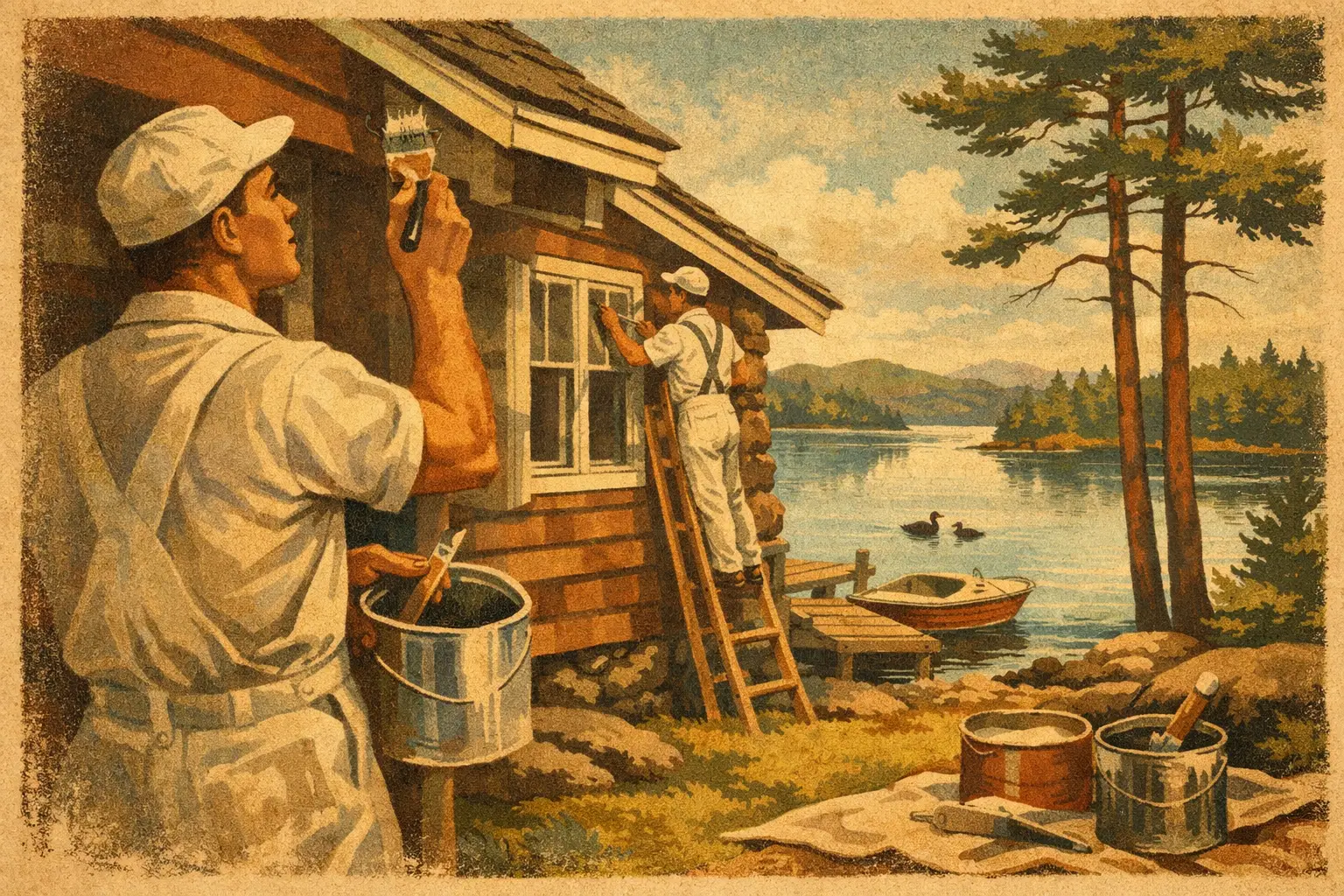
Exterior Painters Muskoka Homeowners Can Trust
A Muskoka exterior does not fail all at once. It starts with a few lifted edges on a fascia board, a chalky patch of siding, or stain that no longer sheds water from a deck. After enough sun, rain, snow, humidity, and freeze-thaw cycles, those small signs can become exposed wood, moisture intrusion, and a property that looks less cared for than it is. Choosing experienced exterior painters Muskoka property owners can rely on is about more than refreshing color. It is about protecting a significant home or cottage investment.
Muskoka Weather Changes the Painting Process
A coating system that performs well in a sheltered neighborhood can struggle on a lakefront cottage, an exposed ridge, or a heavily treed property. Muskoka exteriors face intense ultraviolet exposure, long wet periods, wind-driven rain, mildew pressure, and sharp changes in temperature. Wood expands and contracts. Caulking opens. Horizontal surfaces hold moisture longer than expected.
That is why exterior painting cannot be treated as a quick application job. The work begins with evaluating the surface, the previous coating, the level of weather exposure, and the material underneath. Cedar, pine, engineered wood, aluminum, fiber cement, vinyl, and composite trim each require a different approach. A good-looking finish is not enough if the product, preparation, or application method is wrong for the substrate.
For cottage owners who are away for part of the year, this matters even more. A minor coating failure can go unnoticed through a season of rain and become a larger repair issue by the next visit. Proper maintenance helps keep that risk manageable.
What Professional Exterior Painters in Muskoka Should Address
The visible painting is only one part of an exterior project. Lasting results depend on the work completed before the first finish coat goes on.
Cleaning and surface assessment
Dirt, pollen, mildew, cobwebs, loose paint, and chalking prevent coatings from bonding as intended. Depending on the surface and condition, soft washing, pressure washing, hand cleaning, or a combination of methods may be appropriate. Pressure is useful, but it must be controlled. Too much pressure can damage wood fibers, force water behind siding, or leave a surface that needs more repair than it did before cleaning.
Once the exterior is clean and dry, the condition of the existing finish becomes clearer. This is the point to identify peeling areas, failed caulking, nail pops, deteriorated trim, water staining, and soft wood. Painting over those conditions may improve appearance temporarily, but it does not correct the source of failure.
Preparation that matches the material
Scraping, sanding, feathering edges, spot priming, filling, caulking, and masking are not glamorous tasks, but they are where a professional paint job earns its durability. Bare wood needs the right primer. Glossy or sound older coatings may need scuff sanding for adhesion. Open joints need a flexible, paintable sealant that can move with the building.
Paint in buildings finished before about 1980 should be assumed to contain lead. Have it tested before scraping or sanding, and avoid dry sanding, power sanding or heat stripping; if lead is present the work needs wet methods, containment and HEPA cleanup, or a contractor equipped for it.
Preparation also requires judgment. Not every weathered board needs replacement, and not every aged finish can be saved with spot repairs. Sometimes a maintenance coating is the sensible choice. In other cases, widespread coating failure means a more thorough removal and priming process is the better long-term investment. The right answer depends on the exterior's condition, exposure, and how long the owner expects the finish to perform.
Coatings applied in suitable conditions
Paint and stain have temperature, humidity, and dry-time requirements. A rushed schedule can create problems such as poor adhesion, lap marks, blistering, or a finish that remains soft longer than it should. Muskoka's shoulder seasons can be especially unpredictable, with cool mornings, afternoon heat, and damp evening conditions.
A qualified crew plans around the forecast, moisture levels, and the specific coating system. That may mean adjusting the work sequence, protecting completed areas, or waiting when conditions are not right. Waiting can be inconvenient, but applying premium material under poor conditions is not a shortcut worth taking.
Paint, Stain, or Solid Stain?
The best finish is not always paint. Many Muskoka properties combine painted trim and siding with stained logs, decks, railings, soffits, or wood accents. Each surface needs a product chosen for both protection and appearance.
Paint provides strong color coverage and is often a practical choice for properly prepared wood trim, siding, doors, and fiber cement. It can deliver a crisp, polished look while offering a durable protective film. The trade-off is maintenance: once a film-forming paint system begins to peel, it needs timely attention.
Semi-transparent stain preserves more of the wood grain and is often selected for cedar or other attractive natural wood. It can weather more gradually than paint, but it offers less color uniformity and may require more frequent maintenance in high-exposure areas.
Solid stain sits between the two. It provides more coverage than a transparent stain while retaining a flatter, wood-friendly appearance. It can be an excellent option for aging wood siding, although prior coatings and surface condition must be assessed first. Putting a stain over an incompatible existing finish can cause adhesion issues, so product selection should never be based on color alone.
Decks and Fences Need Their Own Plan
Deck staining is often bundled into an exterior project, but it should not be treated like siding. Deck boards receive foot traffic, hold snow, catch direct sunlight, and absorb moisture from below. The result is one of the hardest-working surfaces on the property.
A deck needs cleaning that removes contaminants without damaging the wood, adequate dry time, careful sanding where needed, and a stain selected for the species and condition of the boards. Applying too much product can leave a sticky surface. Applying too little can create uneven protection. Railings, stairs, benches, and fascia also weather differently, so they may need a separate application approach.
Fences have their own challenges, especially where vegetation holds moisture against the boards. A professional inspection can identify whether cleaning and restaining will bring the fence back or whether repairs should be completed before finishing.
Questions Worth Asking Before You Hire
Price matters, but it should not be the only basis for comparing exterior painting quotes. A lower number can reflect fewer preparation hours, lower-grade materials, limited insurance, or unclear scope. Those gaps often become visible only after the job has started.
Ask how surfaces will be cleaned and prepared, what products are proposed, and whether damaged areas are included or identified separately. Confirm who will be on site, how landscaping and outdoor furnishings will be protected, and what cleanup looks like at the end of each day. For a cottage property, it is also reasonable to ask how the contractor communicates if weather delays or hidden repairs affect the schedule.
Insurance and workplace coverage are practical protections, not paperwork details. Property owners should know that the contractor carries appropriate liability insurance and WSIB coverage. Clear written scope, documented color selections, and transparent change procedures help prevent surprises as well.
Roll On Painting brings more than 25 years of experience to Muskoka homes, cottages, and commercial properties, supported by $5 million in insurance coverage, WSIB coverage, GoNano certified installer and reseller status, and a clean, preparation-first approach. Roll On Painting warrants its workmanship for three years from substantial completion. Decks, docks, railing caps and runoff zones are not covered, and other exclusions apply — the written terms set them out. Separately, our Perfect Finish Promise provides two hours of complimentary touch-ups per year of ownership as a goodwill courtesy; unused hours do not carry over.
Plan Exterior Work Before Small Issues Grow
The best time to plan exterior maintenance is before peeling paint or water-darkened wood becomes urgent. Walk the property each spring and again in late summer. Look closely at window trim, end-grain cuts, deck rails, lower courses of siding, roofline details, and areas near downspouts. These are common places for coating wear and moisture problems to appear first.
If you are scheduling a major renovation or new build, consider pre-finishing trim, millwork, siding, and related components in a controlled shop environment before installation. Pre-finishing can improve coverage on edges and backs, support a more consistent finish, and reduce on-site disruption. It is not right for every material or installation method, but it can be a smart quality-control step when coordinated early with the builder.
A well-maintained exterior should let you enjoy your Muskoka property rather than spend every visit looking for the next repair. Give the work enough time, choose a contractor who respects the details, and address weather exposure while it is still a maintenance item instead of a restoration project.