
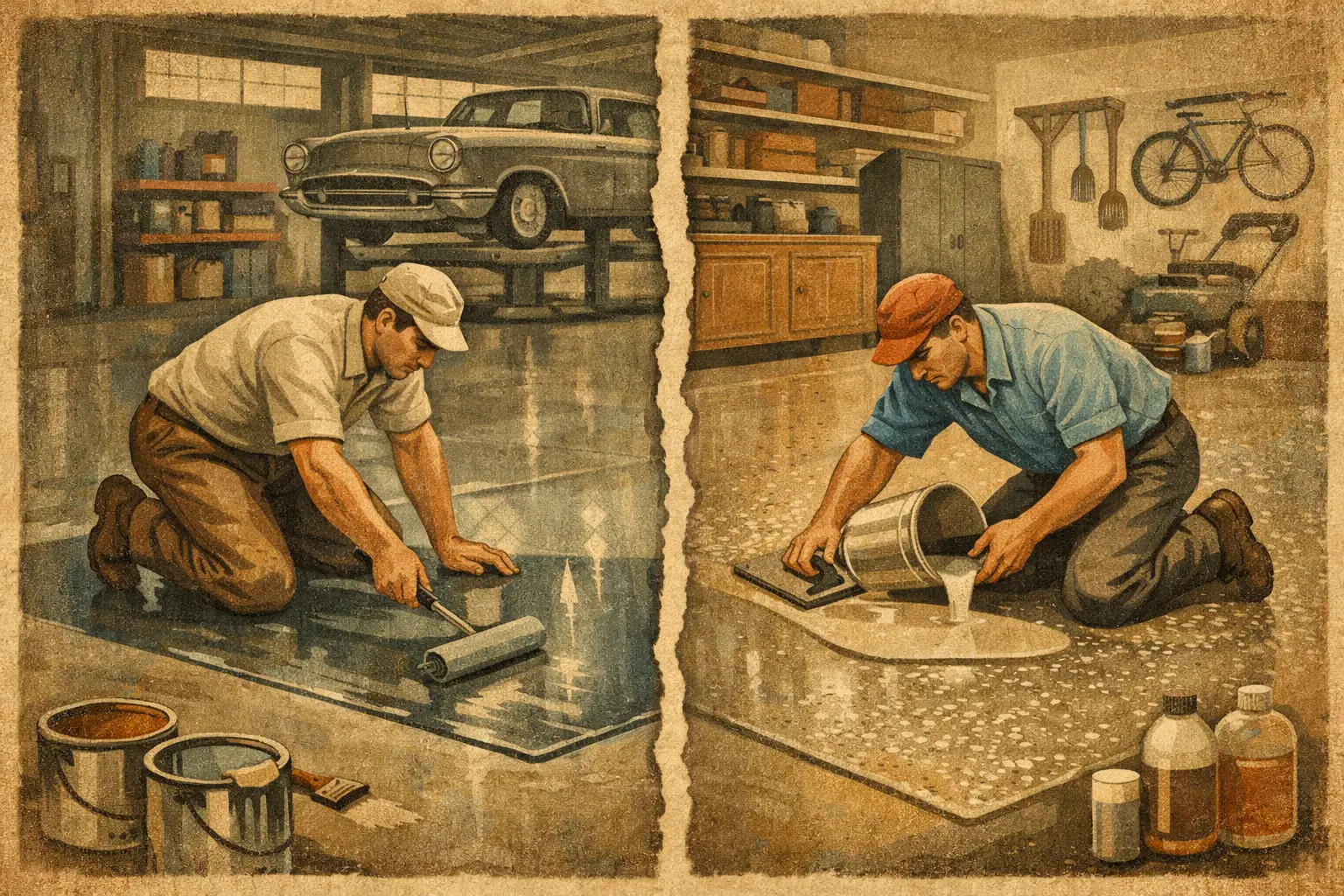
Epoxy Versus Polyaspartic Floors Compared
A garage floor at a Muskoka home or cottage has a harder job than it may appear. It carries wet vehicles, road salt, sand, firewood, tools, seasonal storage, and the occasional snowmobile or ATV. When comparing epoxy versus polyaspartic floors, the right answer is not simply the coating with the boldest warranty or fastest installation. It is the system that fits the concrete, the space, the schedule, and the way the property is actually used.
Both finishes can turn stained, dusty concrete into a clean, durable surface that is easier to maintain and far more polished. Their performance, however, depends heavily on correct preparation and professional application. A premium coating cannot compensate for weak concrete, moisture pressure, or a surface that was not mechanically prepared.
Epoxy Versus Polyaspartic Floors: The Core Difference
Epoxy is a two-part resin coating that cures into a hard, bonded surface. It has been a trusted choice for garages, basements, workshops, utility rooms, and commercial spaces for decades. Depending on the system, epoxy may be used as a solid-color coating, a decorative flake floor, a mortar system, or a high-build base layer beneath a protective topcoat.
Polyaspartic is a type of polyurea coating engineered for faster cure times and strong resistance to sunlight. Like epoxy, it can be used with decorative flakes and can create a highly finished garage or workspace floor. Its speed and UV stability make it particularly appealing for property owners who want minimal disruption and a finish that holds its color near doors, windows, or exterior-facing areas.
The comparison is not always epoxy or polyaspartic. Many high-performing floor systems use an epoxy primer or base coat for adhesion and build, followed by a polyaspartic topcoat for UV protection and faster return to service. The best specification should be based on the condition of the slab and the demands of the room, not a one-size-fits-all sales pitch.
Why Concrete Preparation Decides the Result
Concrete is not a perfectly sealed material. It can hold moisture, absorb contaminants, and develop weak or dusty surface layers over time. Garages are especially vulnerable because oil, de-icing salt, tire residue, and winter moisture work their way into the slab.
Professional preparation typically begins with a close inspection of cracks, spalling, old coatings, moisture concerns, and contamination. The concrete must then be mechanically profiled, usually by diamond grinding, to create the texture a coating needs to bond properly. Surface repairs, joint treatment, detailed vacuuming, and careful edge work follow.
Acid etching is not a substitute for proper mechanical preparation on a premium installation. It can clean a surface, but it does not provide the same consistent profile or remove every weak layer of concrete. If a coating peels, chips, or releases in sheets, poor preparation is often the underlying cause.
Diamond grinding also produces fine crystalline silica dust, a serious inhalation hazard. Reputable installers control it with HEPA dust extraction attached to grinding equipment or by wet grinding, and crews should wear proper respiratory protection while the work is underway.
This is also where experienced contractors protect the property. Dust containment, clean work practices, appropriate crack repair materials, and an honest assessment of moisture risk matter as much as the coating selected. A floor can look impressive on installation day and still fail early if the substrate was not properly addressed.
Where Epoxy Performs Best
Epoxy remains a strong choice when a project benefits from a thicker, slower-curing base coat. Its working time allows installers to build coverage carefully, work material into the concrete profile, and create a uniform decorative flake broadcast. In the right system, epoxy offers excellent adhesion and substantial protection from abrasion, many household chemicals, and general garage use.
For an enclosed basement, storage room, workshop, or utility space with limited direct sunlight, epoxy can be an efficient and attractive option. It is also useful where a contractor needs more time to manage a larger or more detailed floor layout.
The trade-off is cure time. Epoxy commonly needs longer before it can accept foot traffic, additional coats, or vehicle use. Temperature and humidity can extend that timeline. At a seasonal property, where access windows are often tight, waiting several days before moving vehicles and equipment back inside may not be practical.
Standard epoxy can also amber or yellow with extended UV exposure. That does not necessarily mean the floor is failing structurally, but it can affect appearance near open garage doors, sunlit windows, and rooms with significant natural light. A UV-stable topcoat can reduce this concern.
Where Polyaspartic Has an Advantage
Polyaspartic coatings are valued for their quick cure. In favorable conditions, they can allow a decorative flake system to be installed and returned to light use much sooner than a conventional epoxy-only floor. That reduced downtime can be a major benefit in an active garage, a commercial setting, or a cottage where the owner has only a limited period on site.
They also hold their color well in sunlit spaces. For garages with glass doors, lake-facing accessory buildings, or spaces where doors remain open through warmer months, UV stability is a meaningful advantage. A quality polyaspartic topcoat helps preserve a consistent finish rather than allowing visible yellowing over time.
Polyaspartic coatings can be installed across a wider temperature range than many traditional epoxies, but that does not make cold-weather installation automatic. Concrete temperature, ambient conditions, humidity, dew point, and the manufacturer’s specifications still control whether an application is appropriate. A rushed coating job on a cold or damp slab is not a durable solution.
The fast cure that makes polyaspartic attractive also makes it less forgiving during application. Installers have less working time to maintain a wet edge, distribute flakes evenly, and correct imperfections. That is why product knowledge, crew coordination, and jobsite conditions are especially important.
Durability Is More Than Hardness
Both coating types can produce a durable floor, but durability should be considered in practical terms. The surface needs to resist abrasion from foot traffic and equipment, stand up to dropped tools, tolerate common spills, and remain easy to clean after winter use. A decorative flake system can also help disguise dust and minor debris better than a solid, glossy color.
Hardness alone is not the full story. A coating that is extremely hard but poorly bonded may chip or release from the concrete. A floor that looks thick but was applied over moisture pressure may blister. The appropriate primer, base coat, flake broadcast, and topcoat work together as a system.
For high-use garages, a full-flake broadcast with a quality protective topcoat is often a practical balance of appearance and performance. Texture can be adjusted for traction, though more aggressive texture can make cleaning slightly more involved. The right level depends on whether the space is primarily a showroom-style garage, a working shop, a mudroom entry, or a commercial service area.
Cost, Timing, and Long-Term Value
Polyaspartic systems often carry a higher upfront cost than a basic epoxy application, particularly when installed as a complete professional system. Their faster return-to-service time and UV resistance can justify that investment for many owners. Epoxy may offer better value where schedule flexibility is available and direct sunlight is limited.
Be cautious when comparing estimates that appear to describe the same floor at very different prices. Ask what preparation is included, whether cracks will be repaired, how many coats are being applied, what product system is specified, and when the floor can safely return to vehicle traffic. A low price can leave out the steps that protect the investment.
For a high-value home, cottage, or commercial property, the goal should be a floor that continues to look intentional after years of seasonal use. That usually means choosing a contractor based on preparation standards, coating knowledge, insurance coverage, and accountability, not just on a fast installation promise.
Choosing the Right Floor for Your Space
Choose epoxy when you need a proven, high-build foundation, have adequate curing time, and are coating an enclosed area with little UV exposure. Choose polyaspartic when quick turnaround and sunlight resistance are priorities, especially for an active garage or a project with a narrow scheduling window.
For many properties, a hybrid system is the best answer: epoxy where its adhesion and build are useful, then a polyaspartic topcoat where UV stability and faster cure add value. The slab condition may change that recommendation, which is why an on-site assessment is worth more than a generic product claim.
A professionally finished floor should make daily ownership easier. It should stand up to wet boots, tire tracks, salt, storage bins, and the working reality of a garage without making the space feel purely utilitarian. With careful preparation and the right coating system, it becomes one more well-protected part of the property.