
Best Garage Floor Coatings for Lasting Protection
A garage floor has a difficult job in Muskoka. It receives wet boots, road salt, gravel, snowmelt, hot tires, lawn equipment, and the occasional dropped tool. The best garage floor coatings do more than make concrete look cleaner. They create a protective system that resists staining, simplifies maintenance, and gives a hardworking space the finished appearance it deserves.
The right choice depends on how the garage is used, the condition of the concrete, moisture levels, and the installation window. A coating that looks impressive on day one can peel prematurely if the slab was not properly prepared. For a lasting result, product selection and surface preparation must be treated as one decision.
What Are the Best Garage Floor Coatings?
For most residential garages, professionally installed epoxy and polyaspartic systems are the strongest options. Both can produce a clean, durable finish, but they perform differently and suit different project conditions.
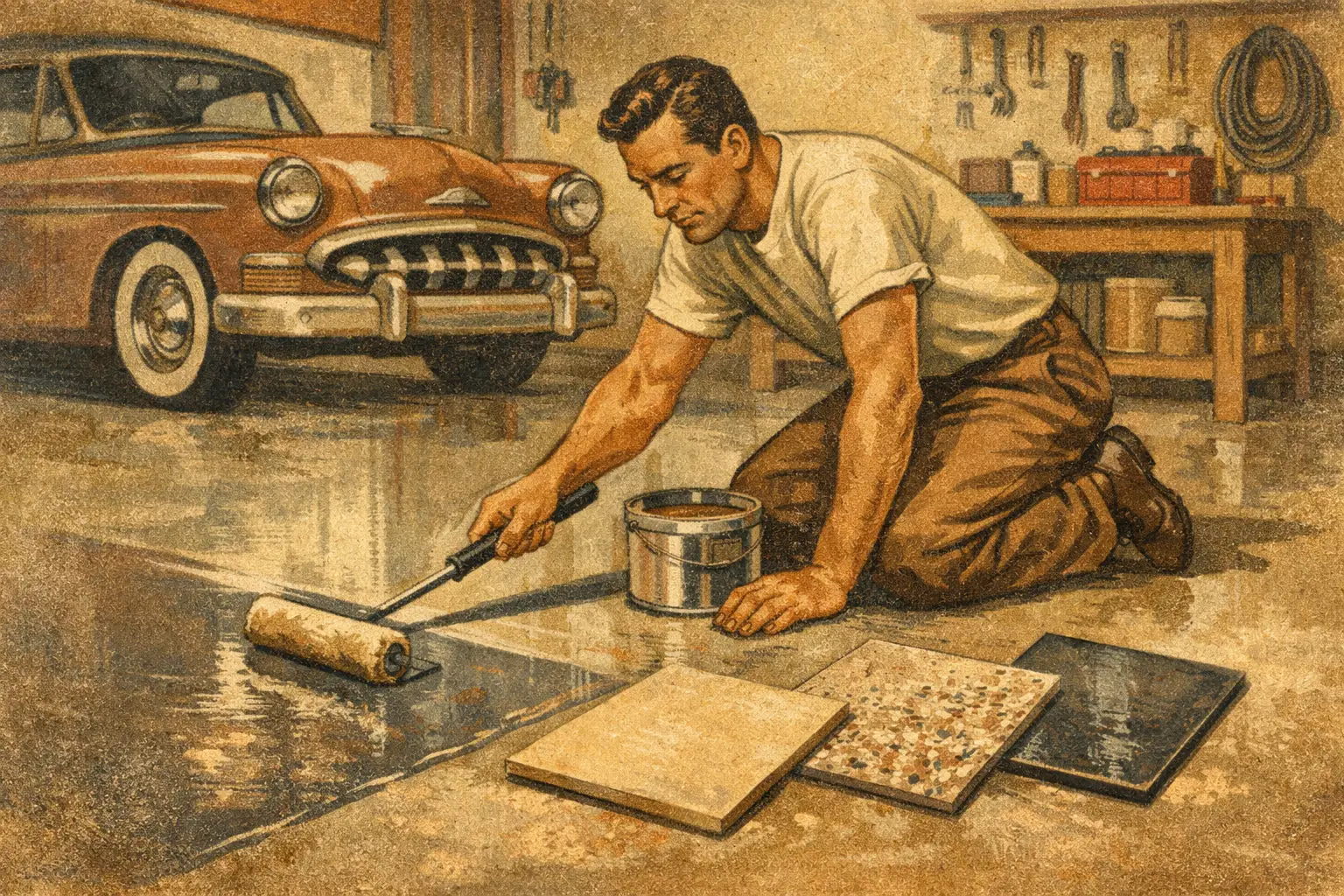
Epoxy is a proven coating material with excellent adhesion, strong chemical resistance, and a substantial build. It is especially effective for garages that see vehicle traffic, stored equipment, workshop activity, and occasional spills. A quality epoxy system can be finished in solid colors, decorative flake blends, or a more subtle broadcast texture for added traction.
Polyaspartic coatings are a type of polyurea coating valued for fast cure times, UV stability, and flexibility. They are often a smart choice where scheduling is tight or where sunlight enters the garage regularly. Unlike many standard epoxies, polyaspartics are less likely to amber or yellow with UV exposure. They can also tolerate a wider range of installation conditions when the correct system is specified.
A premium garage floor often combines materials rather than relying on a single coat. An epoxy base can build a durable foundation, while a polyaspartic or urethane topcoat adds abrasion resistance, chemical protection, and a more stable finish. The best system is not always the product with the most impressive label. It is the one matched to the slab, the use of the space, and the local environment.
Epoxy: A Dependable Choice for High-Use Garages
Epoxy remains one of the most respected garage floor coatings for good reason. It bonds strongly to properly prepared concrete and stands up well to oil, gasoline, household chemicals, and routine vehicle traffic. Its thicker application also helps create a smooth, uniform appearance over minor surface variation.
For a garage that doubles as a workshop, storage area, or utility space, epoxy offers serious practical value. Decorative vinyl flakes can be broadcast into the coating to help disguise dust, tire marks, and small imperfections. A clear protective topcoat then seals the flake layer and makes the floor easier to sweep or mop.
There are trade-offs. Epoxy typically needs more curing time than fast-set polyaspartic products, and its performance depends heavily on temperature, humidity, and concrete moisture. It is also not automatically UV stable. In a bright garage with large windows or an open overhead door, an epoxy-only finish may gradually discolor unless it is protected with a UV-resistant topcoat.
Polyaspartic Coatings: Fast Return to Service
Polyaspartic systems are often selected when property owners want minimal downtime without compromising on finish quality. Under suitable conditions, some systems can be installed and returned to light use much faster than traditional epoxy. That can be valuable for seasonal residents, busy households, and commercial spaces where a garage or service bay cannot remain out of commission for long.
These coatings are also highly resistant to UV exposure, abrasion, and many common chemicals. Their flexibility can be an advantage on concrete that experiences seasonal movement. In cottage-country properties, where temperature changes and moisture are a regular part of the environment, that flexibility matters.
Fast curing is not the same as easy installation. Polyaspartics have a shorter working time, which leaves little room for uneven application, missed edges, or poor flake distribution. Proper equipment, trained installers, and a clear plan for each stage are essential. A rushed coating project is rarely a good value, even when the product itself is premium.
Concrete Preparation Determines Whether a Coating Lasts
The biggest difference between a floor that performs for years and one that starts lifting is often hidden beneath the finish. Concrete is porous, and garage slabs can hold contaminants that interfere with adhesion. Oil residue, curing compounds, old paint, sealers, tire dressing, and surface dust must be addressed before coating begins.
Professional mechanical preparation is the preferred starting point for most coating projects. Diamond grinding opens the concrete surface, removes weak material, and creates the profile needed for the coating to bond. Acid etching is sometimes presented as a shortcut, but it does not reliably remove contaminants or provide the same level of surface control as mechanical grinding.
Diamond grinding also generates fine crystalline silica dust, which is a health hazard when inhaled. Professional crews should perform grinding with HEPA-filtered dust extraction attached to the equipment, or use a wet-grinding method to keep dust down, and workers on site should wear appropriate respiratory protection throughout the process.
Cracks, spalls, and damaged joints should also be evaluated before the first coat is applied. A coating can improve the appearance of repaired concrete, but it cannot stop an actively moving crack from returning. The right repair material and realistic expectations are part of a professional recommendation.
Moisture deserves special attention. Water vapor can move upward through a concrete slab even when the surface appears dry. If moisture pressure is excessive, it can cause blisters, delamination, or coating failure. A qualified installer will assess the slab and, when needed, specify a moisture-mitigating primer rather than applying a finish system and hoping for the best.
The Best Finish Depends on How You Use the Garage
A showpiece garage for a collector vehicle has different needs than a family garage that manages winter salt and wet gear every day. High-gloss finishes reflect light beautifully and can make a space feel larger, but they show dust, footprints, and tire marks more readily. Satin finishes are often more forgiving while still looking polished.
Texture is another decision worth making carefully. Decorative flakes and traction additives can improve grip, especially near entry doors and vehicle parking areas where snowmelt collects. Too much aggressive texture, however, can make cleaning harder and may be uncomfortable underfoot. The goal is controlled slip resistance, not a rough industrial surface.
Color also affects maintenance. Medium gray, warm gray, and blended flake systems tend to hide routine debris better than pure white or very dark solid colors. For garages attached to refined Muskoka homes and cottages, a coordinated flake blend can provide a finished look without becoming overly decorative.
Coatings That Usually Fall Short
DIY single-part “epoxy paint” is not the same as a professional two-component epoxy coating. It may freshen a floor temporarily, but it is generally thinner, less resistant to hot-tire pickup, and less durable under chemicals and abrasion. It can be suitable for a lightly used storage room, but it is rarely the best long-term answer for an active garage.
Concrete sealers serve a different purpose. Penetrating sealers can reduce water and salt intrusion while preserving the natural appearance of concrete. They are useful when a homeowner does not want a film-forming finish, but they will not deliver the stain resistance, color consistency, or cleanability of a full coating system.
Interlocking tiles and roll-out mats are alternatives rather than coatings. They can be practical for temporary coverage or for hiding a floor that cannot yet be coated, but debris and moisture can collect underneath. They also do not repair concrete or provide the bonded protection of a professionally prepared coating system.
Questions to Ask Before Hiring a Garage Floor Coating Contractor
A trustworthy contractor should be willing to explain the complete system, not simply name a product. Ask how the concrete will be prepared, whether moisture will be tested, how cracks and joints will be handled, and what cure time is required before parking a vehicle. Request clarity on the number of coats, the topcoat material, and whether the quoted price includes repairs, grinding, flake broadcast, and cleanup.
Insurance and jobsite practices matter, too. Your garage connects to a valuable home or cottage, often with finished spaces directly above or beside it. Choose a contractor with appropriate coverage, trained crews, clean containment practices, and a clear process for protecting adjacent surfaces. At Roll On Painting, careful preparation and a tidy, accountable jobsite are treated as part of the finish, not as optional extras.
A coating should also come with realistic care guidance. Sweeping grit regularly, rinsing away road salt, using gentle cleaners, and placing protective pads under heavy equipment will preserve the finish. Even a high-performance system benefits from sensible maintenance.
The best garage floor coating is the one that fits the way you live on the property and is installed on concrete that has been properly assessed and prepared. When the system is chosen carefully, the garage becomes easier to maintain, more resilient through the seasons, and far more satisfying to walk into every day.