
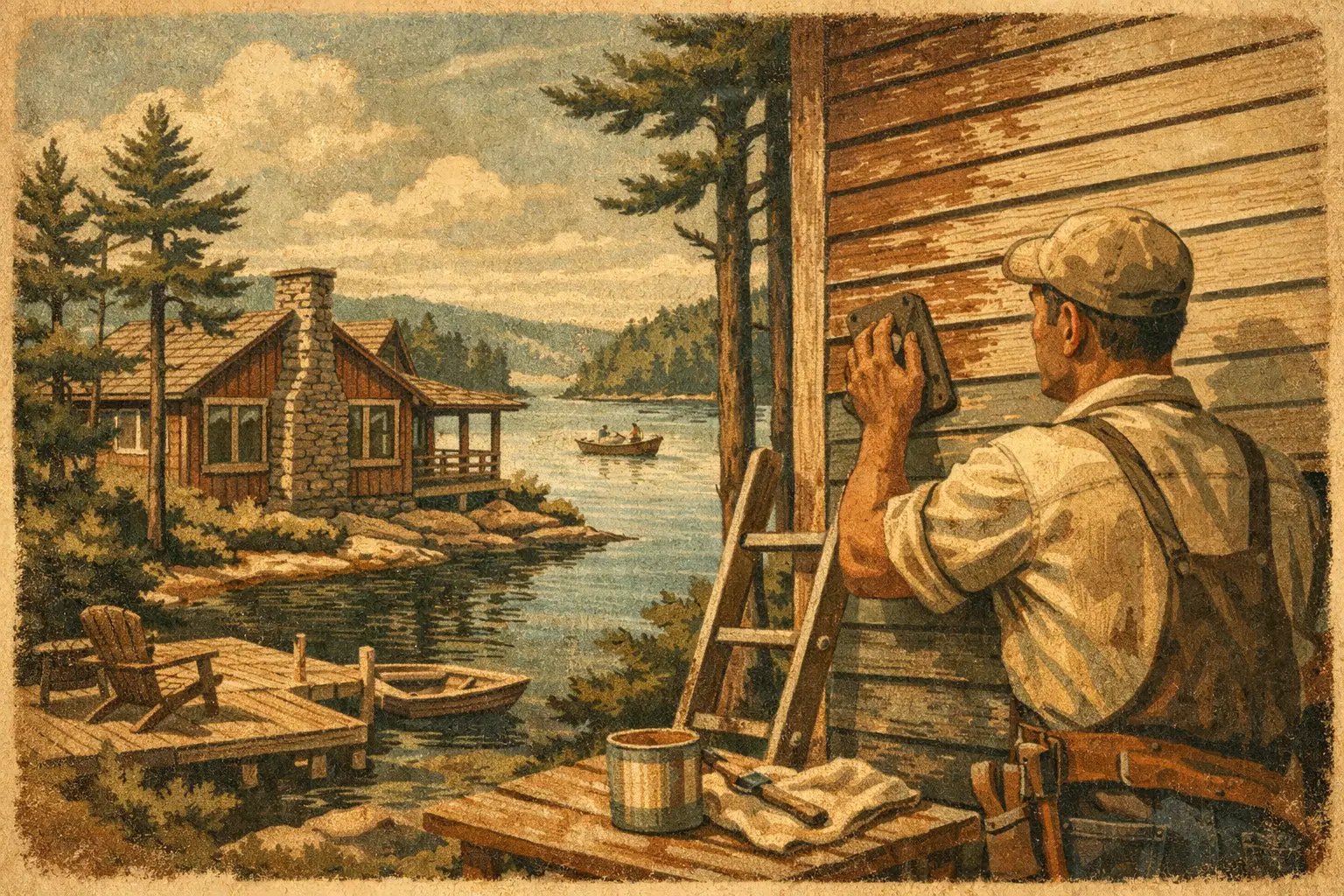
Weathered Siding Restoration for Muskoka Homes
A cottage can look tired long before its siding has reached the end of its useful life. Faded boards, peeling paint, dark staining around joints, and rough exposed grain are common after years of Muskoka sun, rain, snow, and seasonal moisture. Proper weathered siding restoration can bring back the character of a home or cottage while addressing the surface conditions that let water and wear get worse.
The key is not simply applying a fresh coat of paint. Exterior siding performs best when the existing finish, the wood beneath it, and the conditions around the building are assessed as one system. That is where professional preparation makes the difference between a finish that looks good for one season and one that protects the property for years.
Start by Finding the Cause of the Wear
Weathering is expected on exterior wood, but not all weathering is the same. South- and west-facing elevations often fade and dry out more quickly under direct sun. Shaded walls may develop mildew, algae, or persistent dampness. Areas near rooflines, window trim, deck connections, and gutters can show staining or peeling because water is repeatedly reaching the siding.
Before restoration begins, a careful inspection should distinguish cosmetic deterioration from active damage. Surface chalking, faded stain, and localized peeling may be resolved through cleaning, sanding, spot priming, and recoating. Soft wood, boards that flex under light pressure, widespread cupping, deep checking, or rot around openings may require carpentry repairs or board replacement before finishing work starts.
This is an important trade-off for property owners. Painting over compromised material can make a wall look better temporarily, but it does not stop moisture from entering damaged wood. Replacing only the unsound sections, then blending the repair into a properly prepared finish, is often the more responsible investment.
Cleaning Is the First Step in Weathered Siding Restoration
A new coating can only bond to what is underneath it. Dirt, pollen, oxidation, mildew, insect residue, and loose paint all interfere with adhesion. On cottages that sit near water or beneath mature trees, that buildup can be substantial even when it is not immediately obvious from a distance.
Professional cleaning may include soft washing, targeted washing solutions, and controlled pressure washing where appropriate. The purpose is to remove contaminants without driving water behind the siding, gouging wood fibers, or damaging older paint. High pressure is not automatically better. Used carelessly, it can leave a fuzzy wood surface that requires more sanding and can create new entry points for moisture.
After washing, siding needs adequate time to dry. This is especially important in humid weather or on shaded elevations. Applying primer or paint to damp wood can trap moisture and shorten the life of the finish. A qualified contractor plans around weather conditions rather than treating exterior work as a rush job.
Removing Failed Coatings Without Overworking the Wood
Loose and peeling paint must be removed to a sound edge. Depending on the siding and existing coating, this may involve hand scraping, sanding, or other controlled methods. Paint in buildings finished before about 1980 should be assumed to contain lead. Have it tested before scraping or sanding, and avoid dry sanding, power sanding or heat stripping; if lead is present the work needs wet methods, containment and HEPA cleanup, or a contractor equipped for it. The goal is not always to strip every wall down to bare wood. Complete stripping can be appropriate in some cases, but it is labor-intensive and may not be necessary when much of the existing coating remains secure.
Instead, a practical restoration approach focuses on eliminating failure, smoothing transitions between bare and coated areas, and creating a stable surface for primer. This reduces the visible ridges that can show through a new finish and gives the topcoat a more uniform appearance.
Older properties may also have legacy coatings that require special care. A professional crew uses appropriate containment, cleanup practices, and site protection to keep the work area orderly and reduce risk for the household, guests, and surrounding landscape.
Repairs and Caulking Protect the Finish From Behind
Painting is not a substitute for repairs, and caulking is not a fix for every gap. Failed boards, open joints, loose fasteners, deteriorated trim, and gaps around windows should be addressed before coating begins. Where water is getting behind siding, the solution may involve flashing, drainage details, or repairs beyond the paint scope.
Caulk is best used at stable joints where it can move within its intended range. It should not be packed into areas designed to drain or ventilate. Over-caulking can hold moisture where it does not belong, particularly on wood siding systems. This is one reason exterior finishing benefits from an experienced eye rather than a quick, blanket application of sealant.
A detailed preparation process also includes protecting stonework, windows, railings, landscaping, decks, and other finished surfaces. On a high-value Muskoka property, clean lines and a clean job site are part of the result, not an optional extra.
Primer Choice Determines How Well the New Finish Holds
Bare wood needs primer, but the right product depends on the condition of the siding and the type of topcoat being used. A quality exterior primer helps seal porous wood, improve adhesion, and block stains from knots, tannins, or water marks. On previously painted surfaces, spot priming may be sufficient after repairs and scraping. On heavily weathered or extensively bare siding, a more comprehensive priming approach may be needed.
This is also the stage where a contractor evaluates compatibility. Mixing coatings without considering what is already on the house can lead to adhesion problems, flashing, or premature peeling. The finish system should be selected as a complete package: properly prepared substrate, compatible primer, and premium exterior paint or stain suited to the siding material and exposure.
Solid-color stains and exterior paints can both be effective, but they create different looks and maintenance expectations. Paint typically provides more coverage and a more uniform appearance. Stain can preserve more of the wood texture, depending on opacity, but weathered wood may absorb it unevenly without extensive preparation. The right choice depends on the look you want, the condition of the boards, and how much ongoing maintenance you are prepared to take on.
Application Quality Matters on Muskoka Exteriors
Once preparation is complete, application conditions matter as much as the coating itself. Temperature, humidity, direct sun, wind, and the risk of rain all influence how a finish flows, dries, and bonds. Most conventional exterior coatings need surface and air temperature above about 10°C, holding overnight, with the surface above the dew point - which realistically means late spring to early fall in Muskoka. Paint applied to hot sun-baked siding can dry too quickly. Coatings applied too late in the day may not cure adequately before evening moisture settles in.
Professional weathered siding restoration accounts for these variables and applies coatings at the recommended coverage rate. Thin coats may look acceptable at first but provide less protection. Heavy coats can sag, skin over, or fail to cure correctly. Brushing and rolling can work particularly well on wood siding because the coating is worked into grain, joints, and board edges. Spraying can be efficient on appropriate surfaces, but it still requires careful masking and back-brushing or back-rolling when the system calls for it.
For cottages used seasonally, scheduling is another practical consideration. Exterior projects should be timed to allow access, drying time, and minimal disruption to family weekends or rental turnover. Clear communication about preparation needs, work areas, and weather-related adjustments helps prevent surprises.
Know When Restoration Is No Longer the Right Answer
Not every siding problem should be painted. If rot is widespread, boards have lost their structural integrity, or moisture is repeatedly entering from a building detail, replacement and repair should come first. A reputable painting contractor will explain that clearly rather than using paint to hide a problem that will return.
For siding that is fundamentally sound, however, restoration is often far more cost-effective than full replacement. It preserves original wood character, refreshes curb appeal, and provides a renewed protective barrier against the weather that Muskoka properties face year after year.
With more than 25 years of experience, Roll On Painting approaches exterior work with careful preparation, insured professional crews, and finishing systems selected for lasting performance. The best time to plan restoration is when fading and minor peeling first appear, before small maintenance issues turn into extensive repairs. A well-prepared finish gives your home or cottage the polished appearance it deserves while helping protect the structure beneath it.