
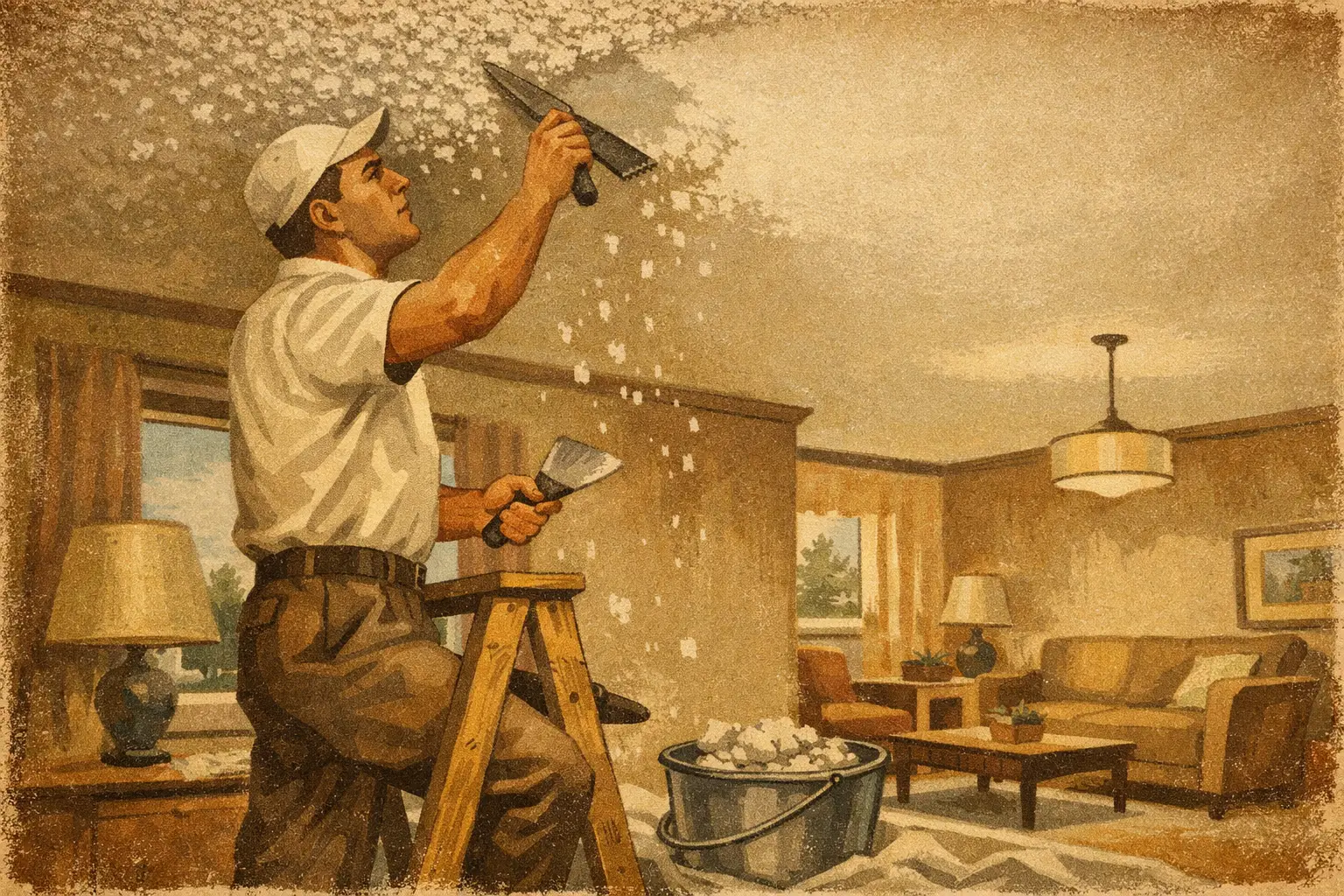
Popcorn Ceiling Removal for a Cleaner Interior
A textured ceiling can make an otherwise well-kept Muskoka home or cottage feel dated the moment light hits it. Popcorn ceiling removal is one of the most noticeable interior updates a property owner can make, but it is not a job to approach with a spray bottle, a scraper, and a free weekend. The material overhead may conceal safety concerns, years of repairs, and a surface that needs careful finishing before it is ready for paint.
For homes that host family gatherings, cottage weekends, rental guests, or professional clients, a smooth ceiling creates a cleaner visual line and reflects light more evenly. Done properly, it also leaves the room protected, orderly, and ready for years of use.
Test Before Anything Is Wetted, Scraped, or Sanded
Textured ceiling finishes and drywall joint compound installed before about 1990 should be assumed to contain asbestos until a sample has been tested. Testing has to come first, before the ceiling is misted, scraped, sanded, or otherwise disturbed. If the result is positive, the material needs licensed abatement, not a painting or drywall job.
Skim-coating over the existing texture or screwing new drywall through it are not ways to avoid testing. Both actions disturb the material underneath just as directly as scraping does, and both can release fibers if the ceiling turns out to be hazardous. A responsible contractor confirms what the material is before recommending any removal method.
Why Popcorn Ceilings Need a Professional Approach
Popcorn texture was widely used because it helped disguise drywall seams, minor framing movement, and uneven ceiling surfaces. It also offered a quick way to finish large areas. The same qualities that made it convenient decades ago can make removal complicated now.
A textured ceiling can trap dust, cobwebs, smoke residue, and discoloration. In cottages that sit closed for part of the year, the texture can make seasonal cleaning especially frustrating. It is also difficult to patch invisibly. A small stain from a roof issue, plumbing leak, or condensation problem often becomes a larger ceiling repair because matching old texture is rarely exact.
Safety is not an optional add-on. It determines how the project should proceed, and it starts with confirming what the material actually is before any tool touches it.
What a Proper Popcorn Ceiling Removal Process Looks Like
The visible scraping is only one stage of the work. A premium result depends on preparation, containment, repair, and finishing discipline.
Planning accounts for occupancy
The project plan should account for the property’s occupancy. A primary residence, a seasonal cottage, a condominium unit, and an operating commercial space each need a different schedule and containment strategy. In many cases, completing the work while a cottage is vacant can reduce disruption and make access easier.
The room is protected before removal begins
Ceiling work creates dust, even when the texture can be softened and removed with controlled moisture. Professional crews protect floors, furniture, walls, fixtures, vents, and door openings before disturbing the surface. Work areas should be contained, and cleanup should be treated as part of the project rather than an afterthought.
This is particularly valuable in furnished cottages with wood floors, custom millwork, stone fireplaces, and upholstered pieces that are not easily replaced. Careful masking and clean job-site practices protect the investment below the ceiling as much as the ceiling itself.
Texture removal is controlled, not rushed
Once the surface is confirmed safe to work on, the texture may be softened in manageable areas and removed with the right tools and pressure. The goal is to take off the texture without gouging the drywall paper or damaging ceiling joints. Aggressive scraping can create more repair work and weaken the surface that must later accept compound and primer.
Some ceilings have been painted multiple times, which changes the approach. Paint can prevent water from penetrating the texture, making simple wet scraping ineffective. In those cases, the scope may involve more extensive surface preparation, skim coating, or another appropriate finishing method. There is no single shortcut that works for every ceiling.
Repairs and skim coating create the finished surface
After removal, the real condition of the ceiling becomes visible. Old seams, nail pops, patch lines, water staining, or uneven drywall may need repair. A skim coat can level minor imperfections and create the continuous surface expected in a refined interior.
This stage requires patience. Joint compound must dry properly, be sanded carefully, and receive additional coats where needed. Rushing to paint over an uneven ceiling may save time for a day, but side lighting from windows and recessed fixtures will reveal flaws for years.
Primer and paint complete the system
A repaired ceiling should be primed with a product suited to the surface and any remaining stains. Primer promotes even absorption, helps prevent discoloration from bleeding through, and gives the finish paint a consistent base.
Flat ceiling paint is often the practical choice because it minimizes glare and helps conceal very minor surface variation. However, the right sheen depends on the room, ceiling condition, lighting, and maintenance needs. Bathrooms, kitchens, and high-humidity cottage spaces may require a coating system with greater moisture resistance. The best choice is based on the room, not a one-size-fits-all paint specification.
The Difference a Smooth Ceiling Makes
Removing popcorn texture can change how an entire room feels without altering its footprint. Smooth ceilings make crown molding, beams, new lighting, fresh wall colors, and well-finished trim stand out for the right reasons. They can make lower ceilings feel less visually crowded and help daylight travel farther through the space.
For property owners preparing a home for sale or refreshing a cottage before the season, the update can also reduce a strong visual signal of age. It does not mean every room needs to look stark or modern. A smooth painted ceiling works equally well in a classic lake house, a renovated heritage property, or a contemporary new build because it lets the architecture and furnishings take the lead.
There is also a maintenance benefit. Smooth surfaces are easier to dust, inspect, repaint, and repair. When a ceiling stain or small drywall issue occurs later, the repair process is generally more straightforward than trying to recreate a textured pattern installed decades earlier.
When Removal May Not Be the Best First Step
Popcorn ceiling removal is worthwhile in many properties, but it is not always the first repair to schedule. If the ceiling has active staining, sagging drywall, or signs of moisture, the source of the problem needs to be corrected before refinishing. Painting or skim coating over an unresolved leak only delays a more expensive repair.
In a property with extensive texture, complex vaulted ceilings, heavy furniture, or limited access, project costs and timing can vary significantly. A room-by-room approach may make more sense than disrupting an entire occupied home at once. Likewise, if asbestos testing identifies a concern, the safest route may change the timeline and scope.
An honest assessment should explain these trade-offs clearly. The lowest price is rarely a useful comparison if it excludes containment, ceiling repairs, primer, proper cleanup, or the steps needed to achieve a truly smooth finish.
Choosing a Contractor for Ceiling Work
Ceiling removal places a crew directly above your floors, furnishings, and finished walls. Ask how the work area will be contained, how surfaces will be protected, what happens if hidden damage is uncovered, and whether the quote includes repairs, priming, and final painting. Insurance and worker coverage matter as well, especially in high-value homes and occupied properties.
Experience with fine interior finishing matters because the final ceiling is judged under changing light, not just immediately after the crew leaves. Roll On Painting brings more than 25 years of surface-finishing experience to projects across Muskoka, with insured operations, WSIB coverage, careful preparation standards, and a focus on clean, complete results.
A smooth ceiling should not call attention to itself. It should make the room feel brighter, calmer, and better cared for every time you look up.