
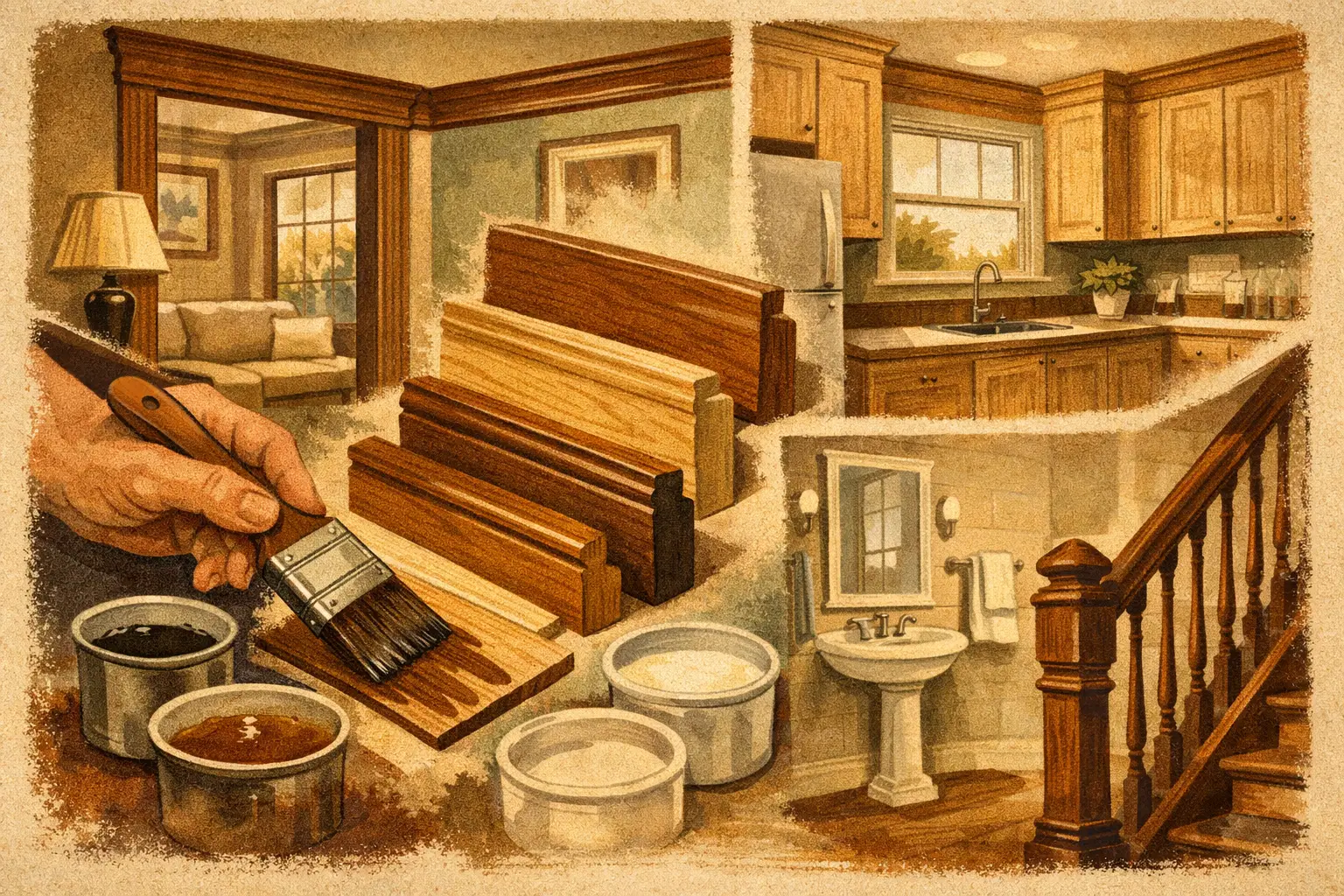
Best Finishes for Wood Trim for Every Room
Fresh trim can make a room feel newly built, but the wrong coating can quickly show every fingerprint, scuff, and seasonal movement in the wood. The best finishes for wood trim depend on where the trim is installed, how much wear it receives, and whether you want a crisp painted look or the warmth of visible grain.
For Muskoka homes and cottages, the decision also has to account for real conditions: wet boots at entryways, humid summer weeks, dry heated winters, children and guests moving through busy rooms, and the maintenance expectations that come with a well-kept property. A premium result is not simply a matter of choosing a good paint color or stain. It comes from matching the finish system to the wood, preparing every surface properly, and applying it under the right conditions.
What Makes a Trim Finish Perform Well?
Trim is a high-contact surface. Door casings, baseboards, window casings, crown molding, and built-in millwork are touched, bumped, cleaned, and exposed to changing light more than most walls. A finish that looks refined on the day it is applied can disappoint if it remains soft, yellows, chips around corners, or makes cleaning difficult.
The right product should provide adhesion, hardness, washability, and an appearance that suits the room. It must also work with the existing coating. Applying a water-based finish over a poorly prepared glossy oil paint, for example, can lead to adhesion failure regardless of how expensive the new product is.
Preparation is the part homeowners rarely see once the work is complete, yet it controls much of the outcome. Cleaning, filling dents, sanding smooth, caulking appropriate joints, spot-priming bare areas, and using a compatible primer create the foundation for a finish that stays looking intentional.
The Best Finishes for Wood Trim by Look and Use
Waterborne Alkyd Enamel: Best All-Around Painted Finish
For most interior trim projects, a premium waterborne alkyd enamel is the strongest all-around choice. It provides the smooth, furniture-like appearance historically associated with oil paint while offering lower odor, faster dry times, and less yellowing over time.
This finish is particularly well suited to baseboards, doors, window trim, casings, and built-ins in active households. It cures to a durable surface that holds up to regular cleaning and everyday contact. White and light-colored trim benefit most because waterborne alkyds stay more color-stable than traditional oil-based paints.
There is a trade-off. These coatings demand careful application and proper dry time between coats. Rushing recoat times or closing freshly painted doors too soon can mark the surface. When applied with disciplined preparation and a controlled process, however, waterborne alkyd enamel provides a polished finish with practical durability.
Acrylic Trim Paint: Best for Faster Turnaround
High-quality acrylic trim paint is another reliable option, especially when project timing, low odor, and quick drying are priorities. It is flexible enough to handle modest seasonal movement in wood and is generally easy to maintain. For rooms that need to return to use quickly, that can be a meaningful advantage.
Acrylic products vary widely. Lower-grade paints may not level as smoothly or resist scuffs as well as a premium enamel. For trim in a guest room, hallway, or lightly used living space, a quality acrylic can perform very well. In hard-working kitchens, mudrooms, staircases, and frequently used door frames, a waterborne alkyd is often worth the upgrade.
Traditional Oil-Based Enamel: Best for Certain Existing Finishes
Oil-based enamel was once the standard for trim because it levels beautifully and dries exceptionally hard. It can still be appropriate for select restoration work, specialty millwork, or situations where an existing oil-based coating requires a compatible system.
Its limitations are significant for many modern interiors. Oil paint has a stronger odor, longer drying time, more demanding cleanup, and a tendency to yellow, especially in areas with limited natural light. White trim in a shaded cottage hallway may take on a warmer cast over time.
Oil enamel is not automatically a better finish simply because it is traditional. It should be selected for a specific reason, not by habit. Proper testing and surface assessment matter before committing to it.
Clear Water-Based Polyurethane: Best for Preserving Light Wood
When the goal is to showcase maple, oak, birch, ash, or other light-toned species, clear water-based polyurethane is often the practical choice. It protects the wood while maintaining a more natural color than many oil-based clear coats.
Water-based polyurethane is a good fit for interior window trim, stair components, custom millwork, and natural-wood details where a clear, low-yellowing appearance is important. Satin is commonly the most forgiving sheen because it offers a subtle finish without emphasizing every small sanding mark or imperfection.
Clear coatings are less forgiving than paint. Wood grain, uneven stain absorption, adhesive residue, and sanding scratches can remain visible beneath the finish. This is why sample boards are valuable, particularly with custom millwork or high-visibility feature walls.
Oil-Based Polyurethane: Best for a Warm, Richer Tone
Oil-based polyurethane gives wood a warmer, amber tone and can deepen the visual character of oak, pine, cherry, and walnut. That richness can suit traditional cottages, heritage-inspired interiors, and rooms with warm flooring or exposed timber.
The ambering effect is both its appeal and its limitation. It may be exactly right for a pine casing or stained oak trim, but it can make pale maple or birch look more yellow than expected. It also dries more slowly and carries a stronger odor than water-based alternatives.
For a cohesive natural-wood interior, the finish should be tested beside flooring, cabinets, and nearby wall colors. A trim sample held in isolation rarely tells the whole story.
Stain and Clear Coat: Best for Character Wood
Stain is not a protective finish by itself. It changes the color of the wood, then requires a clear topcoat for durability. This combination works well when the grain is worth highlighting but the natural color needs to be adjusted to coordinate with flooring, cabinetry, or existing beams.
The challenge is consistency. Different boards, grain patterns, and wood species absorb stain differently. Softwoods such as pine can become blotchy without a conditioner or proper finishing system. For new construction trim and millwork, pre-finishing in a controlled shop environment can provide more even coverage and reduce site disruption after installation.
Choose the Right Sheen for the Room
Sheen affects both appearance and maintenance. A higher sheen reflects more light and is easier to wipe clean, but it also makes surface flaws more visible. Lower sheens hide minor imperfections better but may not offer the same crisp, formal look.
For most painted wood trim, satin or semi-gloss is the practical range. Satin offers a softer, contemporary appearance and is forgiving on older trim. Semi-gloss delivers stronger contrast against matte walls and is popular for detailed casings, doors, and traditional interiors. High gloss can look striking on exceptionally smooth millwork, but it exposes every brush mark, dent, and waviness in the substrate.
With clear finishes, satin is usually the safest choice for occupied homes and cottages. Gloss may suit selected architectural details, while matte can feel natural but may be less resistant to repeated cleaning depending on the product.
When Existing Trim Changes the Plan
Before choosing a new finish, identify what is already on the trim. Older homes may have layers of oil paint, varnish, shellac, or poorly adhered coatings beneath the visible surface. A simple adhesion test and careful inspection can prevent a costly failure.
Glossy paint generally needs thorough cleaning and sanding before recoating. Bare knots in pine may require a stain-blocking primer to prevent discoloration from bleeding through white paint. Water stains, smoke residue, and tannin-rich wood can also require specialty primers rather than a standard one-coat approach.
Caulk deserves the same attention. It is useful at stable gaps between trim and walls, but it should not be used to hide every joint in moving wood components. Over-caulked trim can crack and create an untidy line as seasonal conditions shift.
Why Professional Application Matters
A premium trim finish is judged up close. Homeowners notice uneven sheen, rough edges, paint on adjacent surfaces, brush marks, and gaps long after a project is complete. The difference between acceptable and exceptional work is usually found in protection, sanding discipline, primer selection, and application technique.
At Roll On Painting, that process is treated as part of protecting the property, not as an optional upgrade. Clean work areas, careful masking, proper coating systems, and clear expectations reduce disruption while producing trim that complements the rest of the home. For occupied cottages, renovation schedules, and high-value millwork, that level of control matters.
If you are deciding between painted trim, a clear natural finish, or stained millwork, start with a sample in the actual room. View it in morning light, evening light, and alongside the flooring and wall color. The best choice is the one that looks considered on day one and still feels easy to live with years later.